

Photo-Illustration: Intelligencer; Photo: Getty Images
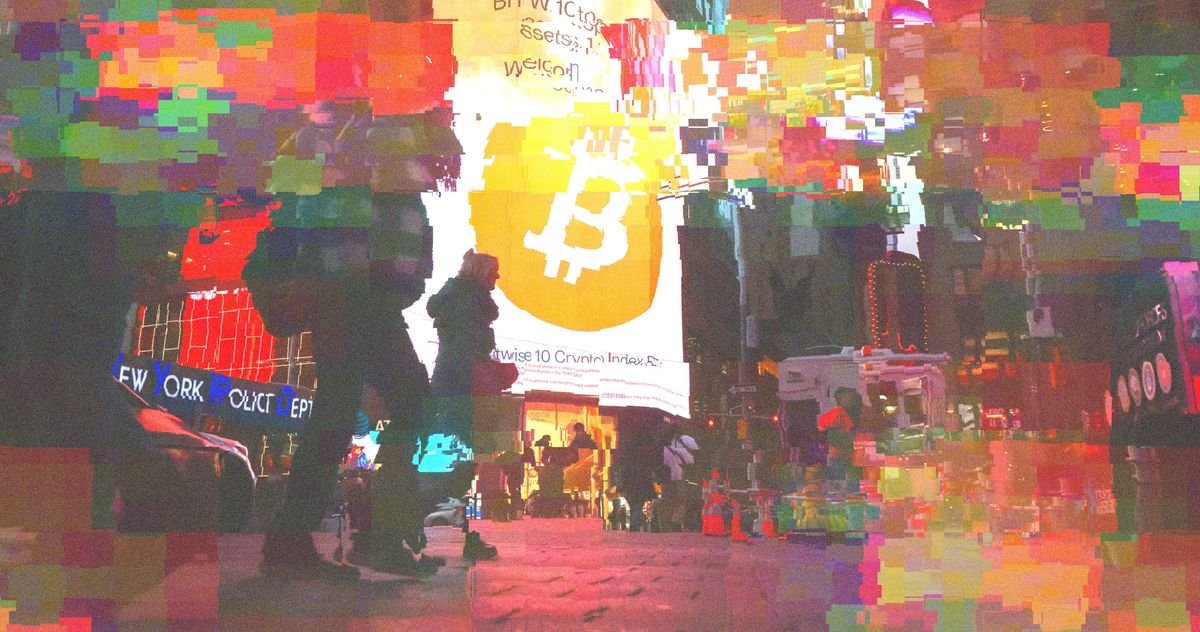
Around Election Day, 2024, the price of bitcoin started a long, steep climb. Already priced near its all-time high, and driven in part by the imminent arrival of an extremely pro-crypto administration, a bitcoin worth around $70,000 was, by October of 2025, at more than $126,000. That, for the time being, was the top: By Thanksgiving, it was back near $90,000 before briefly stabilizing. This week, in the context of a broader plunge in tech stocks and commodities, it nearly touched $60,000.
Longtime bitcoin holders will correctly point out that swings like this come with the territory and have plenty of recent precedent. In early 2018, bitcoin prices fell by more than half; if you were late to the COVID crypto boom, buying at the top and panic-selling at the bottom, you might have lost 75 percent of your money. They might also point out that, ten years ago, bitcoin was priced in the low hundreds.
I won’t pretend to know where we are in this cycle or what the future holds for bitcoin. But among crypto watchers, it does seem there’s an emerging sense that this crash is different. In the early 2010s, crypto was a curiosity; by the early 2020s, it was a multitrillion-dollar phenomenon that had emerged from outside of traditional finance. Now, both politically and mechanically, it’s part of the system. Credible estimates put crypto ownership at around 14 percent of U.S. adults in 2025, with that number reaching 25 percent among men ages 18 to 49. Run-ups tend to attract more people to crypto, so the numbers now are almost certainly higher.

That’s a lot of people feeling the pain right now, and they’re doing so in a changed environment. Early crypto investors found one another on forums, counseling one another on whether to sell — never! — between discussions about the philosophy and possible futures of digital currency. As crypto went more mainstream, its culture grew to encompass mercenary gamblers and investors, who understood it in terms of risk, upside, bets, and trades. The 2020s re-narrativized crypto as a tool to remake the internet, the financial system, and pretty much anything else — this was the era of Web3 and the crypto-adjacent metaverse — marshaling the storytelling resources of Silicon Valley in the process. While the price of Bitcoin, if not most other cryptocurrencies, more than recovered after the subsequent slump — and helped the crypto lobby grow into a massive lobbying force — the blockchain-everything story never quite did, at least with the public, and was replaced the next time around by a volatile political story, rendered crudely as Trump loves crypto — go go go.
Now, Bitcoin investors looking to one another for comfort, or for novel and compelling counternarratives and a fresh, forward-looking thesis, aren’t getting much. As Joe Weisenthal at Bloomberg noticed:
There’s not really a crypto presence on social media these days. Yes, of course, there’s still tons of scammers out there that will spam your replies, but there’s not really an online Bitcoin (or even Ethereum) community like there was a few years ago. Maybe it’s some change to the X algorithm or something like that, but that whole scene has really hollowed out. Nobody’s around to console each other.
It’s true: Look around the parts of social media where crypto’s narrative recovery would have previously taken place, and you’ll see a bunch of people — many of the same people — talking about AI. For most other investments, this might not sound like the most important thing. For an alternative currency that you can’t really use as money — and that has drawn new holders with an extremely wide range of compelling, sometimes tenuous, and often conflicting stories about why it should be more valuable — it matters a lot.
Among those counternarratives is the case for bitcoin as a hedge against currency debasement, suggesting it should be having a moment; instead, it’s moving alongside tech stocks. As with tech stocks, people with no direct interest in crypto are also exposed, now that public pension funds are invested in bitcoin treasury companies, for example, whose stocks have collapsed. And in recent years, a widening pool of investors has bet on crypto through ETFs, which they can buy through traditional brokerage accounts, and which come with the imprimatur of major financial institutions. (An August executive order signed by Donald Trump, titled “Democratizing Access to Alternative Assets for 401(k) Investors,” ordered regulators to figure out how to get crypto, along with other nontraditional assets, into 401(k)s. While that hasn’t yet come to pass, the fact that it didn’t help keep crypto prices up is, as they say, bearish.)
It’s the first real crypto crash: Another fundamentally hard-to-explain swing in a speculative asset, sure, but also a sudden dip in an institutionally and culturally legitimized investment that affects millions of people directly — and indirectly — as a part of the real economy. Bitcoin isn’t an escape from the system. It’s part of it, now, and so is its risk.
