
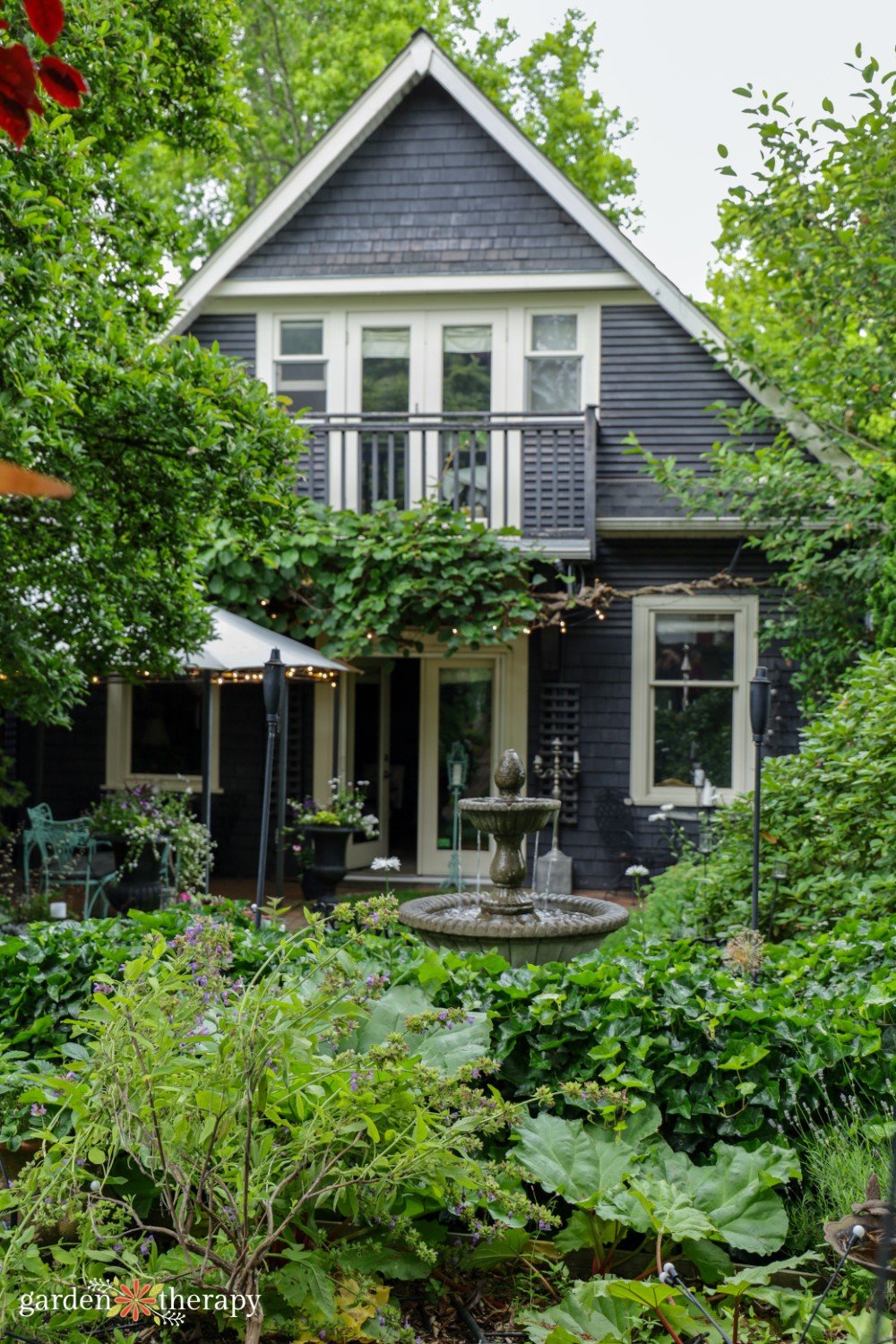
What does it look like to design a home and garden around community? In this Q&A, we explore how one East Van gardener has done exactly that.
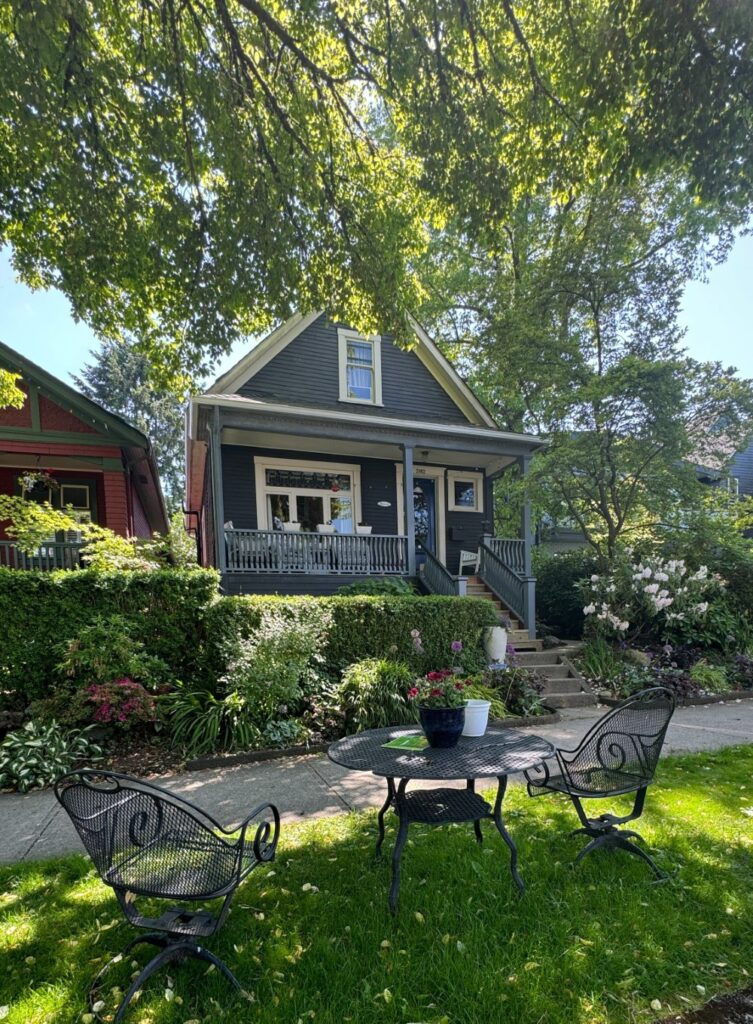
There’s a house in East Van I’ve admired for years. Not because of its size or its beauty, but because of a game of Jenga.
Out front, tucked beneath the street trees, there’s a tiny patio with two chairs and a garden pot full of wooden blocks. On it, a handwritten message inviting passersby to sit down, relax, and play a game. It’s simple, generous, and quietly radical.
The first time I saw the house listed on a local gardening tour, I felt a jolt of excitement. It meant I would get to meet the owner of this fabulous house.
Her name is Karen Reed. When we met on the tour, I told her how much I admired what she’d created. Not just a garden but a space designed for connection.
Karen owns and lives in a six-bedroom community home where both the house and the garden are intentionally set up for sharing. Every path, planting bed, and sitting area reflects that ethos. It’s a home built with community in mind.
Later, I had the chance to interview Karen and photograph her garden for my book, The Wild & Free Garden. Our conversation was so rich and inspiring that I couldn’t fit it all on the page.
Here you’ll find more of that conversation, full of Karen’s advice and her story, as well as photographs to help inspire you too.
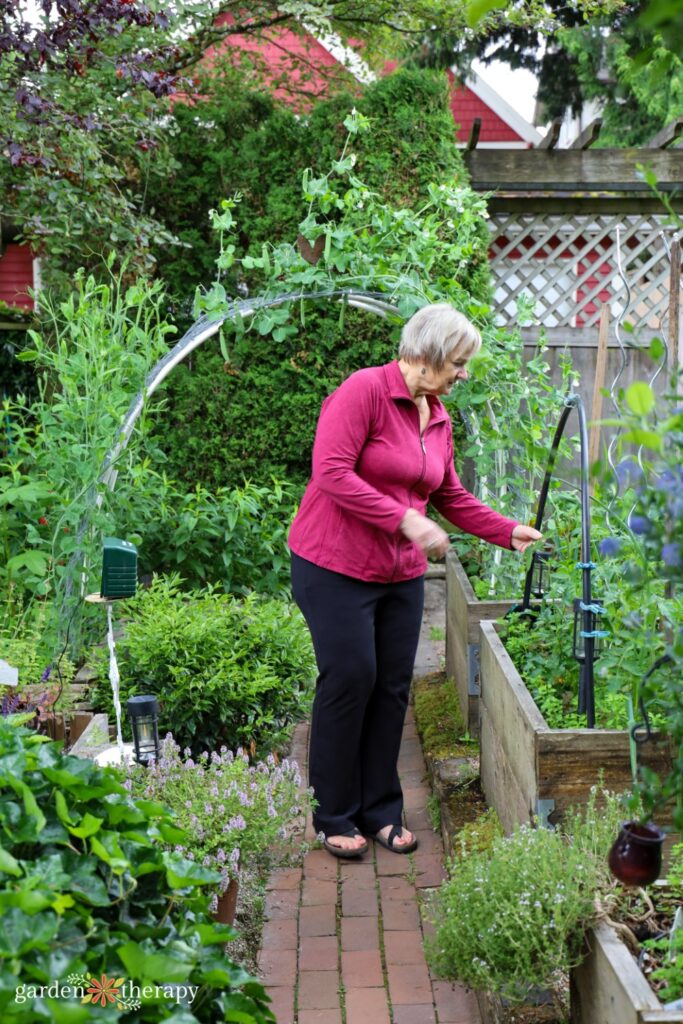
Stephanie: You’ve built yourself quite a community, indoors and outdoors. How does intentional community begin to build?
Karen: Someone must be the catalyst. When I first started, I knew my own longing for a deeper experience of community. I had lived alone a good amount of my life, so I’d never lived in a community.
The Vancouver Foundation did a study and found the number one issue in the city is loneliness and isolation. It’s pretty much the case across the board in every urban center.
You may say hi to a couple of neighbours who know you by your name or go to a market and get recognized. This is a sense of social capital and contributes to a person’s well-being. We’re meant as humans to connect and belong, and everybody’s longing for it. It often just needs somebody to be the initiator.
Stephanie: And how did you start being intentional about forming this community?
Karen: I would sit on my porch in the morning and greet people one by one. I just started to get to know the neighbours. I would intentionally walk in the same area and have people over for coffee.
Very simple, ordinary things. I value creating spaces for people to gather, and so I don’t have a TV as a centerpiece. There’s a conversation pit where you can talk face-to-face.
We have a practice where no one can bring their phone to the table at meals. There’s research that even if you have it on the table, you won’t be able to move into deeper conversations because you could be interrupted.
Intentionally bridge friendships and invite people into your life as friends. I remember my neighbours next door had a hedger and said I could borrow it. So, I intentionally didn’t buy one. I don’t have to have everything on my own, so I don’t. It requires some vulnerability to receive.
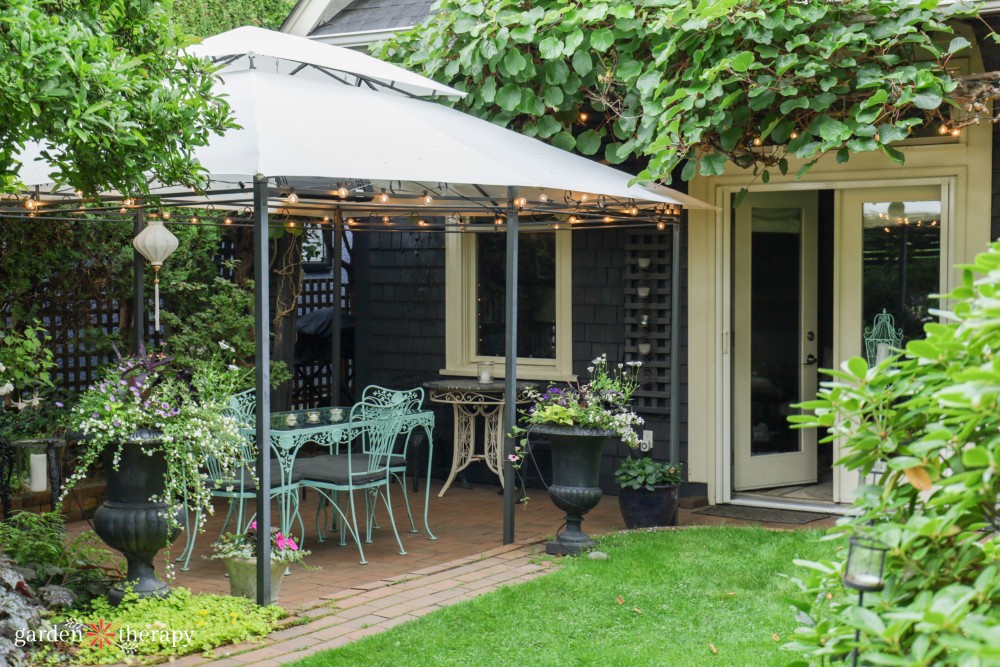
Stephanie: Tell me about soup nights. I know that was one of your ideas to help connect your neighbours.
Karen: The first soup night I had was very low barrier. People didn’t need to RSVP. They could come late, leave early, and bring anyone in their household. They didn’t need to bring anything. I just made good soup.
The whole point is that because it’s soup, it’s easy for them to accept. They don’t have to worry about it being a fancy sit-down meal, and they can escape whenever they want.
People were so jazzed about it. I think it gave people a taste of family. You see intergenerational, socioeconomic, and ethnic diversity, and it just feels like a normal human experience.
After a year, I hardly had to do anything. Everybody just started pitching in. In that first year, I think I had to win some trust. I had several people come to the door saying, “I’ve just come because I want to meet the woman who invites strangers into her home.”
And I thought, when did that become weird?
And so, it took a whole year of building trust. There has to be a willingness on your end. That you offer it with no agenda, and then it takes a life of its own.
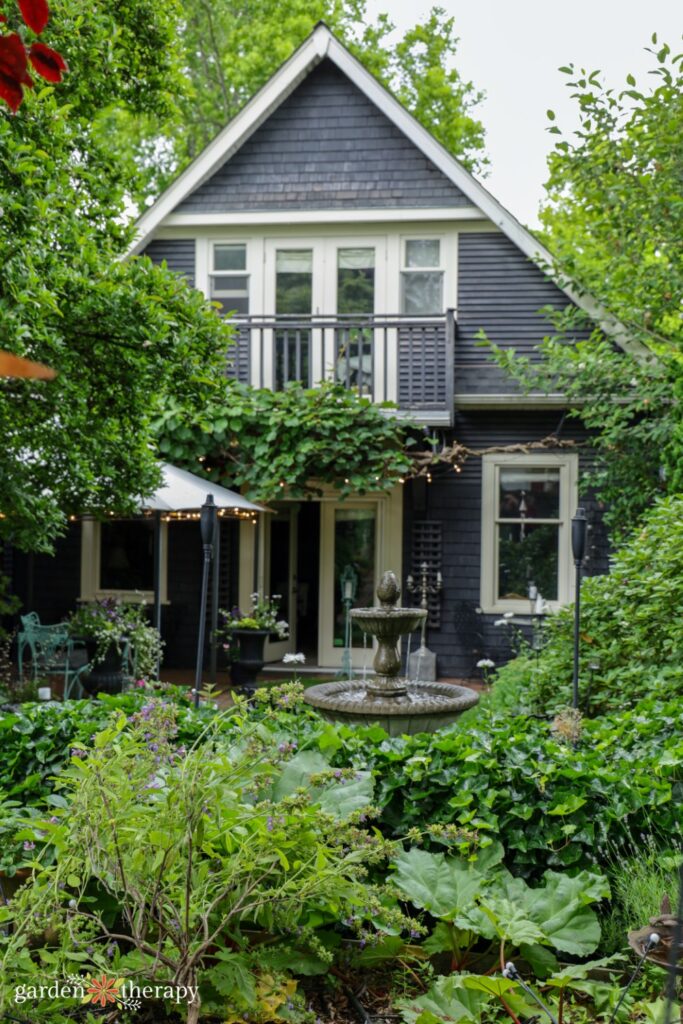
Stephanie: Originally, you told me that you had built a communal vegetable garden out front. What else do you use your space for?
Karen: Yes, a small bed. I initially built the bed for my neighbours. And now I want to rebuild something else that’s a little more functional for the front space. I would often find myself with extra produce from my food garden that I would put out there for free.
During COVID, there was a lot of interest. In the beginning, there was concern about food security issues. So, I got a load of dirt and a few neighbours together to share seeds out on a table. People could talk at a distance if they wanted to try planting and growing some food for the first time.
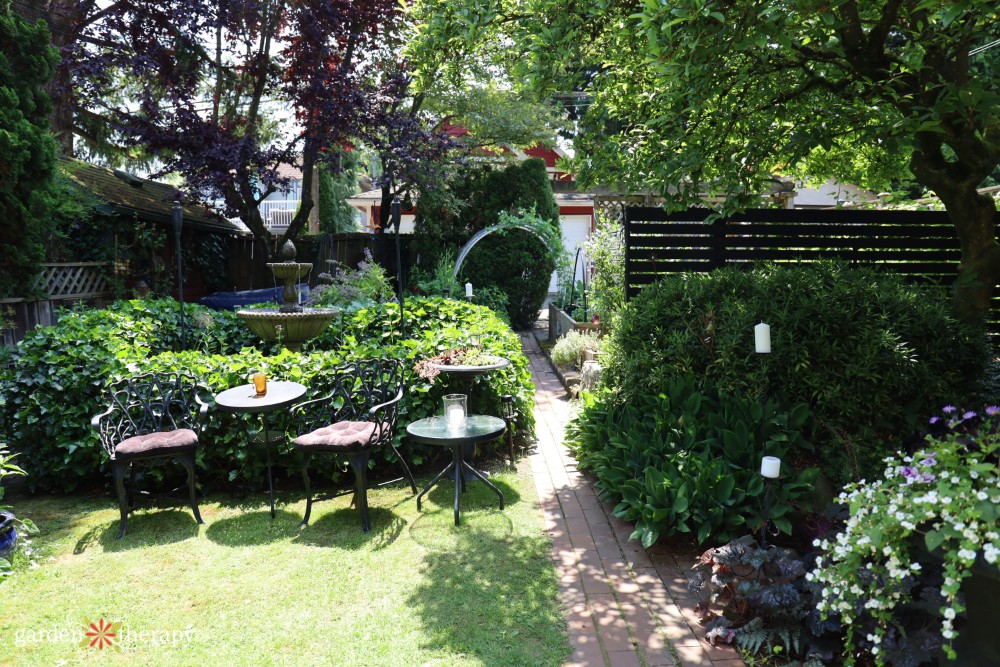
I hold a value that outdoor space can draw the heart toward hope, and you should give attention to it as you would your home. I choose colours that aren’t overstimulating and give attention to the space as a place to gather, for hospitality, for meditation, rest, or solace. And I think my garden space reflects that.
It’s a space that people can gather. We can have parties out there. We can have small dinners. We play cards. I’ve had a movie night out here in the middle of winter.
I have a couple of neighbours who don’t have any yard space. One was in a hard season, and she would just come over a couple of times a week through the back gate to sit there and be in the garden. And that just helped get her through.
I’m not a finicky gardener. It’s not a manicured garden. I keep trying to simplify it. But there is something therapeutic about deadheading, about creating.
I think that’s the only reason they put my garden on the tour. Because it’s not about the plants here; it’s more about sparking inspiration and how you can create your own space.
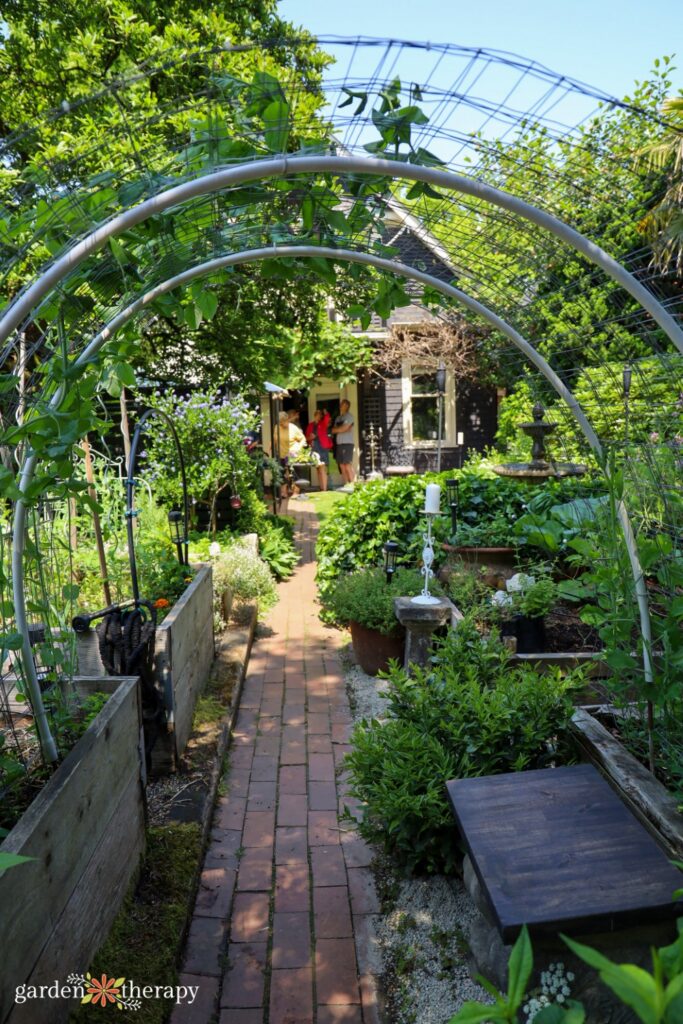
Stephanie: Would you say you carry the knowledge of gardening to your communal house and community?
Karen: Yes. There’s something about getting your hands in the dirt, seeing how things grow, and being able to go out and pick your dinner. We have a community meal tonight, and we’re just going to pick from the garden.
I know how transformative growing food is. We’ve distanced ourselves from food, and how we view food says a lot about our value system. Food is just seen as fuel. And then it becomes transactional. We’ve lost the connection.
So, we always say thank you at mealtimes. We use it as a moment to push against the delusion of self-sufficiency. That we are dependent on farmers, truckers, and market people. And that life was forfeited to sustain us, either plant or animal. I think there’s a sacredness to it.
When we do a big feast, I say we need to take an hour to eat this meal. Because when you’ve grown food, and then you’ve done slow cooking, you cannot eat this meal in fifteen minutes.
Even if we have an abundance of food available to use, I think everybody should know how to grow food. Gardening connects you to living things and helps you understand your place in the ecosystem.
In the ecosystem, you are a steward. There’s a humility in that I cannot make a seed grow. I can kill it. I can protect it. I can feed it. But I cannot make it grow. There’s a larger force at work that’s beyond us, and places us in the whole ecosystem of the world.
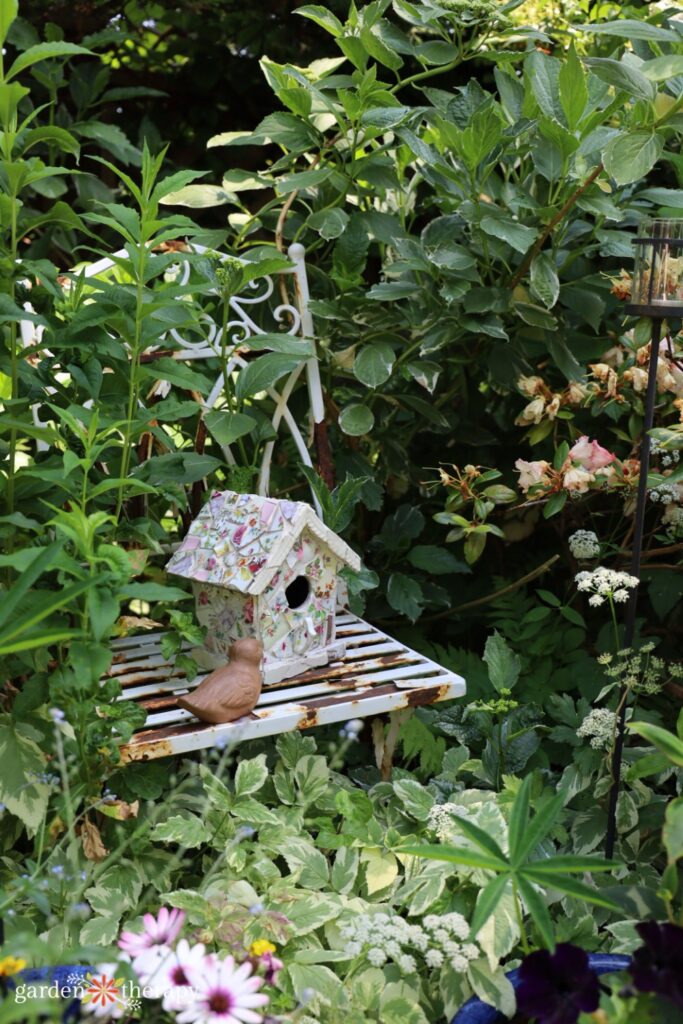
Thank you to Karen Reed for taking the time to share her story, thoughts, garden, and house with me. Her garden, as well as countless others, is featured in The Wild & Free Garden, which is available for pre-order now and hits bookshelves February 24, 2026.
More Garden Tours to Feel Inspired

A city girl who learned to garden and it changed everything. Author, artist, Master Gardener. Better living through plants.
