
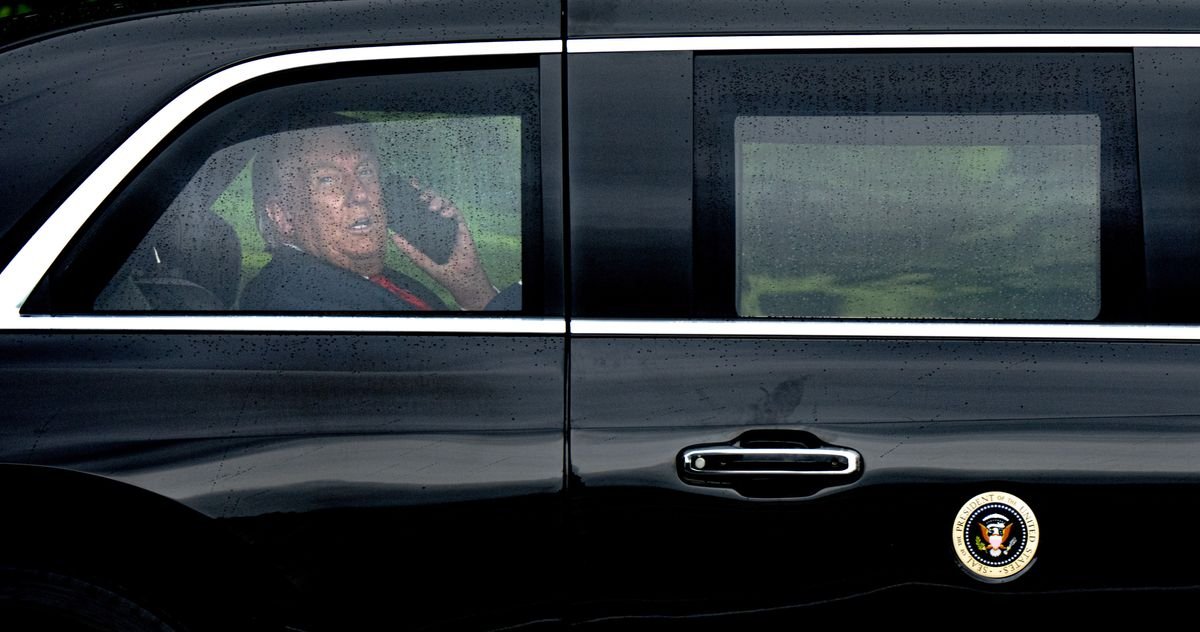

There’s been a lot of spin about the purported drafts of the U.S.-Iran agreement. INSS analyst Danny Citrinowicz told The New Yorker’s Isaac Chotiner on Sunday that there’s basically no deal Iran will offer that isn’t a humiliation for Trump, and anything else you hear is spin:
How would you characterize the contours of this potential deal, and is there any way to spin it as something other than a humiliating failure for the U.S.?
Unfortunately, no. Trump had to choose between a bad option and a worse one, and it seems like, even though we don’t know what will happen in any deal, or if there will even be one, that he has chosen the very bad one. But it is still the best option that he had. We have to remember what happened on February 28th — that Israel and the United States launched this campaign to topple the regime. In fact, they ended up strengthening it. Opening the strait is not an achievement, since its closing was a by-product of the war itself. The Iranians are going to get some money, and sanctions relief may come after the deal is signed, too. If they don’t get money from this, they won’t do it. So, in that regard, what we’re facing right now is a war that may have been a tactical success for the U.S., but is a strategic failure.
But I think Trump is fed up with the current situation, and I think that he’s also afraid of escalation. He could escalate tomorrow, but I think he’s afraid of having boots on the ground. And I think he might be starting to understand that even escalation won’t change the strategic situation, because the Iranians are not going to capitulate. A blockade won’t do it; hitting energy facilities won’t do it; nothing will. And they’re ready to retaliate. So Trump didn’t have any other options besides this deal.
We don’t know exactly what any agreement’s going to say, but from what you’re saying, it seems hard to imagine that Iran is just going to give up its nuclear material to the Trump Administration, or to the International Atomic Energy Agency, or whomever else, because, as you say, they’re in the driver’s seat here.
You’re absolutely right, but we can go even further. Do you really think that Trump will be more inclined to go back to war in the next few months? This would be right before the midterms, and we know what the economic costs will be. And for what? To topple the regime, he would need to put troops on the ground. He won’t be able to just bomb them, because that’s not working, as we saw in this war already. And even if there’s going to be an agreement, who in this Administration is going to negotiate this kind of agreement and make sure that there are no loopholes? Jared Kushner? Steve Witkoff? I don’t think they really understand the Iranian nuclear program. So, yeah, we’ll kick the can down the road. We’ll get some sort of promise or something from the Iranians that they’re gonna do something with the material, and some sort of commitment that they won’t have any nuclear weapons — something that they already had under the Obama nuclear deal. And I am very fearful that we won’t see, like we don’t see in Gaza, any second stage to this agreement. People are saying, No, they want sanctions relief, so we’ll do a second stage. Maybe. But that will only be to freeze some of the material. That second stage will not be the dismantling of the Iranian nuclear facilities. That will not happen, and if it were demanded, there would not be an agreement today.
I have to tell you something about the Iranian regime: They’re feeling so much in the driver’s seat that they’re not going to forgo anything. They have reached their limitations when it comes to compromising, and that’s where we are right now.
The New York Times also noted how the potential agreement may end up being another Gaza-like punt that hardly ends the conflict:
In Gaza, U.S. negotiators initially made good progress. The first part of the agreement last October secured the release of the remaining hostages held by Hamas, a partial Israeli military withdrawal, and a surge in shipments of food and medicine into the territory for desperate Palestinians.
But the Trump administration has hit a wall in resolving the tougher questions that were delayed to the second phase of discussions. Hamas has not laid down its weapons, an international force is not about to be deployed to Gaza, and a new Palestinian administration has not taken charge of rebuilding the enclave’s devastated cities.
Instead, Israel continues to bombard Gaza on a near-daily basis, and Hamas is consolidating its power in the half of the territory that it controls.
