

Create your own custom garden journal, adding your own personal touch using found materials. By putting creativity and intention into your garden journal, you’ll find yourself more enthusiastic and more inclined to fill its pages.
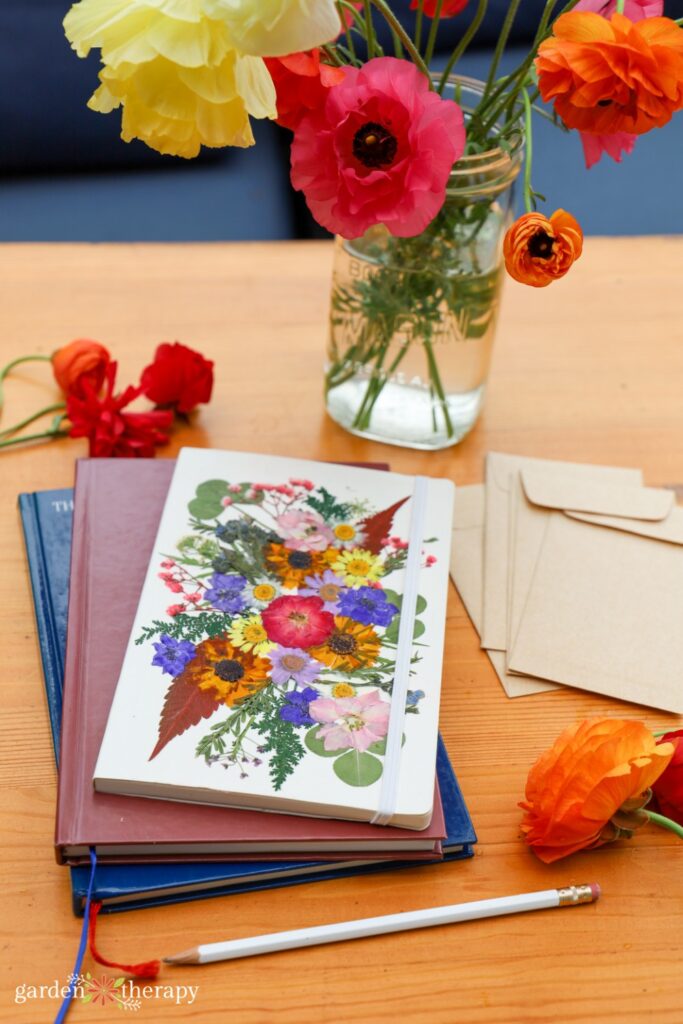
Journaling has become part of my morning routine as a way to start the morning off intentionally.
I know I’m not the first person to rave about journaling. In fact, I’m hopping onto the bandwagon rather late. I transcribe manifestations, gratitude, and ideas all into the journal. Then at night, I review them rather than scrolling on my phone.
For me, journaling isn’t a New Year’s goal or a way to practice creative thinking. It’s my way to slow down, which feels like a rebellion in this day and age.
This practice also applies to the garden. Creating a garden journal is a beautiful way to add intention to your garden. It’s a place to gather knowledge, but also musings and feelings that come from the garden.
This project is an excerpt from The Wild & Free Garden, my new book about creating a garden using found materials and free resources. It’s a book that will inspire you to grow a deeper connection to your garden, your community, and yourself. The book releases February 24, 2026, and is available for pre-order now!
The Neuroscience Behind Garden Journaling
Have you noticed that when you first discover something, you suddenly see it everywhere? Like when you spot a new-to-you plant at the garden centre, and the next day you realize it’s growing in all your neighbours’ gardens.
That’s your reticular activating system (RAS) at work, the network of neurons in our brainstem that acts as a gatekeeper for your awareness. It helps us notice what matters based on our beliefs, thoughts, and experiences.
You can train your RAS through activities like journaling. When you write down your goals, intentions, and garden design ideas, you’re giving your brain clear instructions on what to prioritize. Journaling strengthens this effect by filling your RAS with information about what deserves attention.
When we combine this with gardening, there’s an additional benefit from the therapeutic act itself. Gardening helps us focus on the present and notice signs of growth and progress. We pay attention to what’s resilient and renewing, which rewires our thought patterns to help us see what’s becoming rather than what’s missing.
Garden journaling doesn’t just help us find what we’re looking for; it also helps reset our intentions and reconnect us with nature.
Create a Wild and Free Garden Journal
My mother’s garden journal, which I discovered after she passed away, was a modest spiral-bound school notebook. As I thumbed through the pages, I saw her garden come together with interesting magazine and newspaper clippings pasted alongside her notes. It was beautiful; a keepsake of her garden that was well-organized and deeply personal, yet it didn’t cost a penny to create.
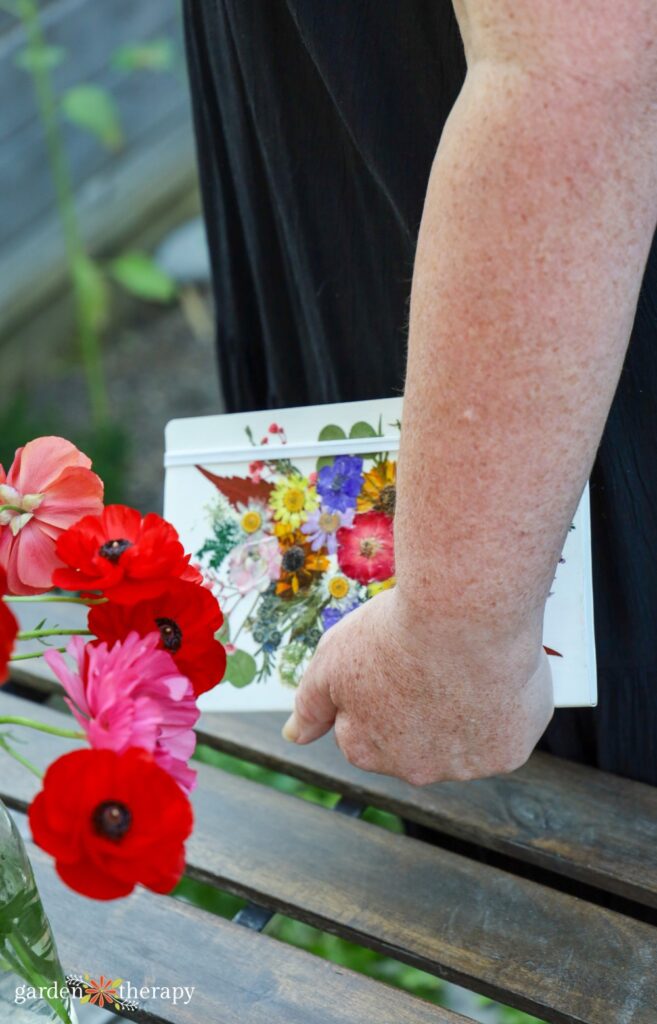
Create your own garden journal with a found notebook and some decorative pressed flowers or images to make it your own. The act of creating a garden journal allows us to create a place for planning. The act of personalizing it, just as my mother did with her pasted articles, fosters value and attachment to the planning process and the record-keeping.
Dedicate as much time to the project as you like, but the more personal it is, the more you will treasure it for years to come.
Materials
Make It!
You probably have a notebook in your home or office that could serve as a garden journal. Often, we have books where we’ve jotted down a few notes or started a journal but never completed it; simply removing those pages can give us a fresh start. Or perhaps you have been given a promotional notebook from a business or event. If you don’t have something that can be repurposed, many other people do, so look for them at Little Free Libraries, paper and book recycling depots, second-hand stores, and free groups.
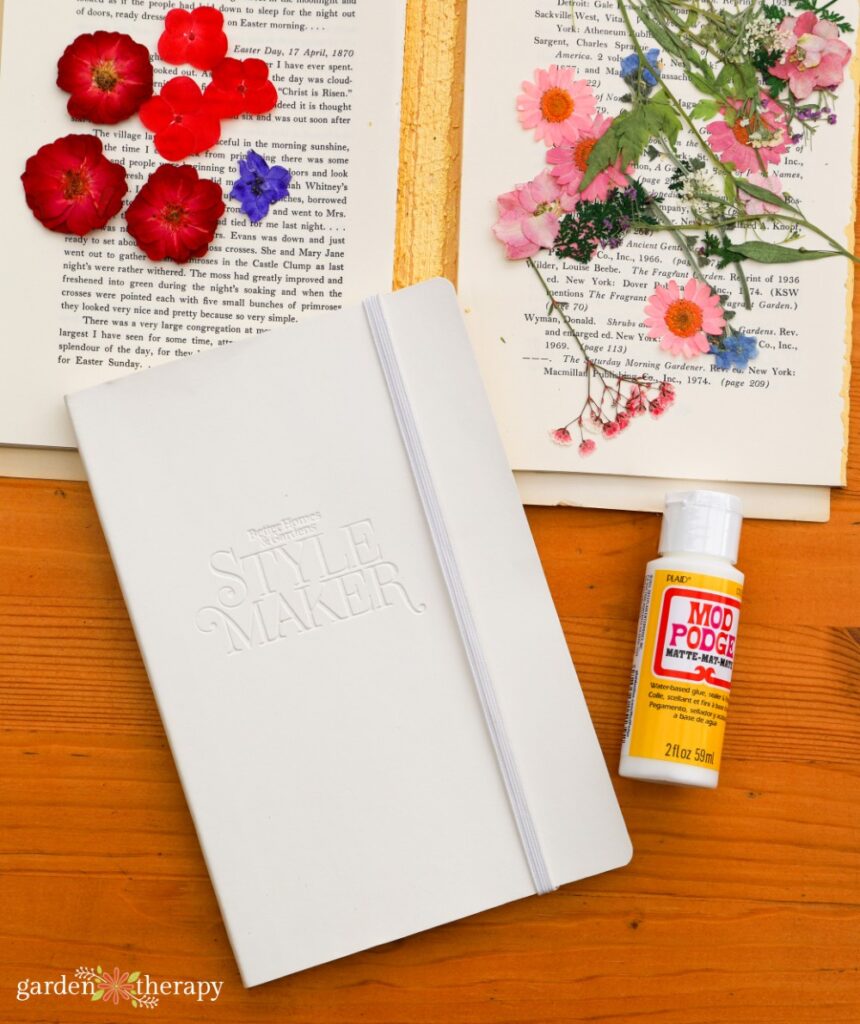
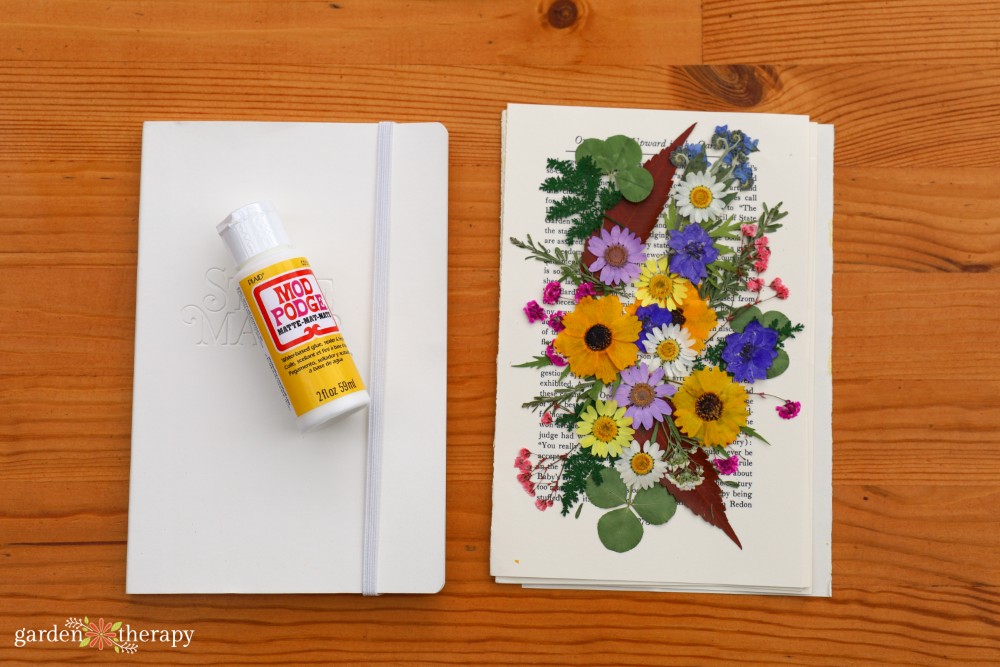
Once you have your notebook, take some time to personalize it. Decoupaging the cover with pressed flowers brings us into our creativity and attaches a value to the notebook that no money could buy. This decoupage project could also be done with printed photos, images from seed catalogues, or old gardening books. The instructions are the same whether you use flowers or paper.
Arrange pressed flowers or other decorative elements on a sheet of paper to map out the final design. When you’re happy with the arrangement, add another sheet of paper on top and flip the flowers so they are upside down. This will help to preserve the layers of the design while you apply the underside to the cover first.
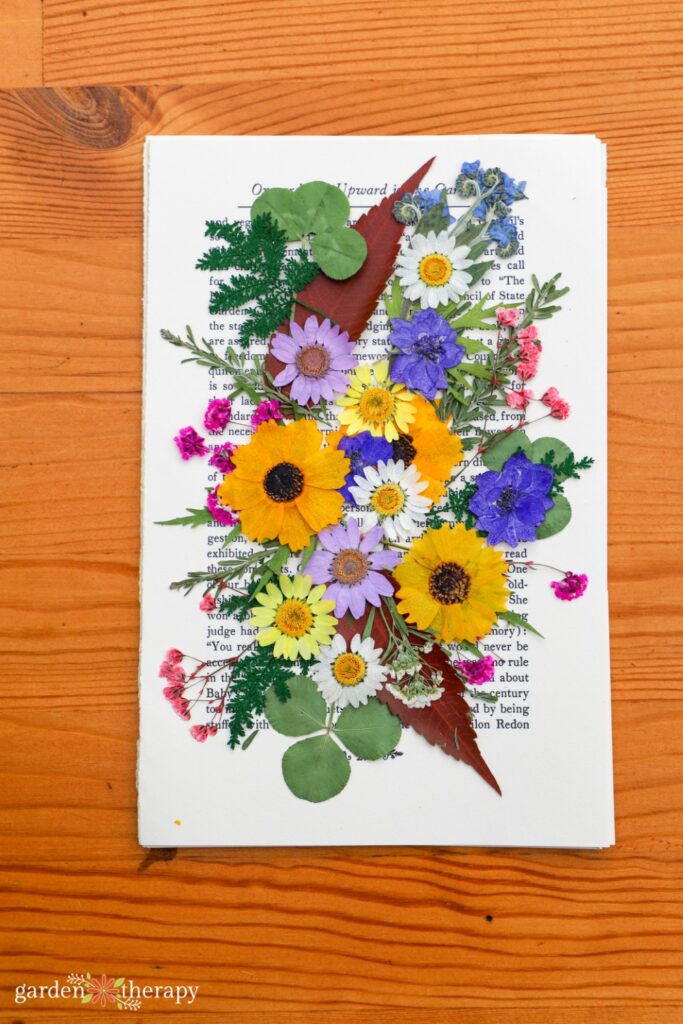
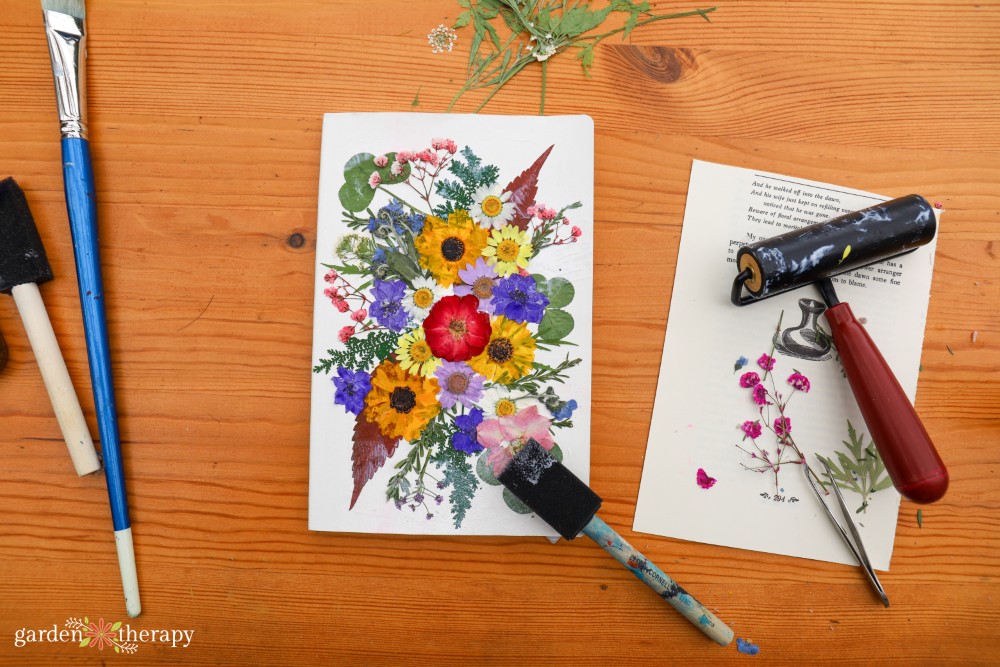
Allow to dry, then apply two to three thin layers of the adhesive over your decorated cover, allowing each layer to dry completely before applying the next.
Create sections for different garden areas or seasons, or just begin filling the pages with notes. It will come together as you work through your garden. Add plant lists, interesting articles, seed packets, and growing tips with lots of room for notes, sketches, and pressed plants.
Expert Tip: Add the date at the top of each page you write and leave room for notes in the following years on those same pages. This way, you can see how your garden grows not just over the season, but over the years.
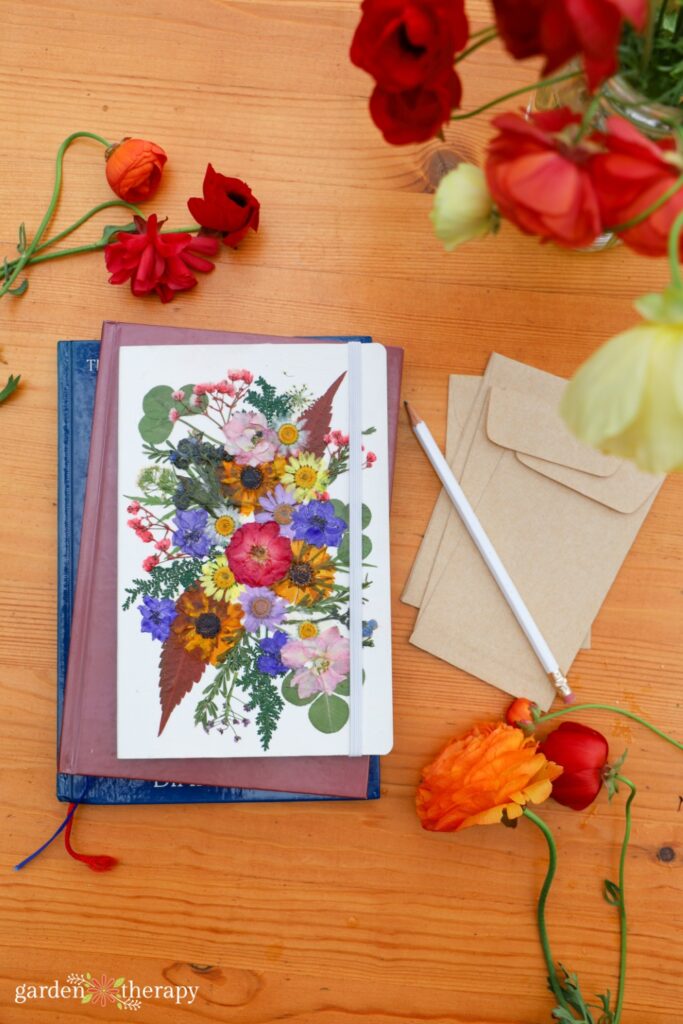
Fill Your Journal!
For inspiration on what to fill your gardening journal with, check out these posts. Better yet, order your copy of The Wild & Free Garden!

A city girl who learned to garden and it changed everything. Author, artist, Master Gardener. Better living through plants.
