
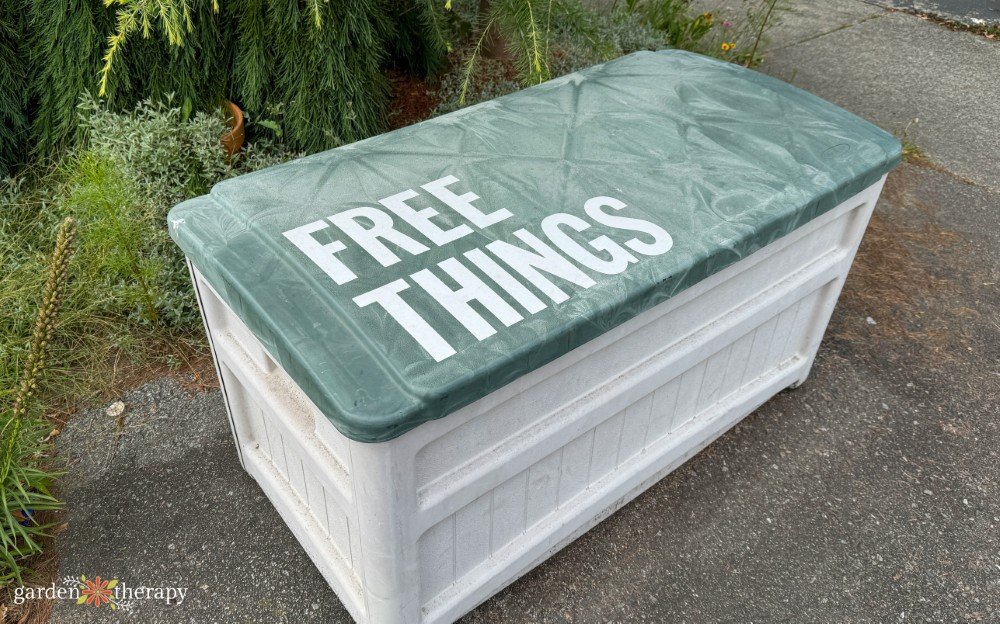
The solution to our waste problem and your spring-cleaning issue is one and the same. Hidden in closets, garden sheds, and kitchen drawers are millions of perfectly usable items waiting for a new home. And when we start passing them along, we reduce waste, create value, and build community all at the same time. Let me introduce you to…the sharing economy!
Take a moment to look around the room you’re in. How many things do you own that you no longer use? A jacket you forget you had, a duplicate tool in the shed, that huge Costco pack of light bulbs. Now imagine how many items you’d happily give away for free or very little.
Then multiply that by your next-door neighbours. By your whole neighbourhood. The entire city.
That’s a lot of unwanted stuff.
So much so that if we were all to participate in selling, gifting, or donating these items, it would create the world’s largest marketplace. It would far bypass any online marketplace and the retail giants.
And everyone benefits. You get items inexpensively, they get to declutter, and we prevent more waste from being produced in the first place. I often find really high-quality, unique items. You’d be surprised by what people are looking to get rid of because it no longer serves them.
That’s how the waste cycle begins to close. Reusing and regifting aren’t just practical; they’re closing the loop. People are coming together to solve a larger problem.
Most of the time, the best part isn’t the item at all. It’s the moment when you hand something to another person and realize you’ve connected with someone in your own community in the process.
Let me explain.
What is the Sharing Economy?
The sharing economy focuses on using your peers and local connections to get something you need rather than buying new. This can include items or services. You can look to borrow hedge shears from your neighbour rather than buying a pair, or help someone with a gardening project, and in return, they fix your squeaky door.
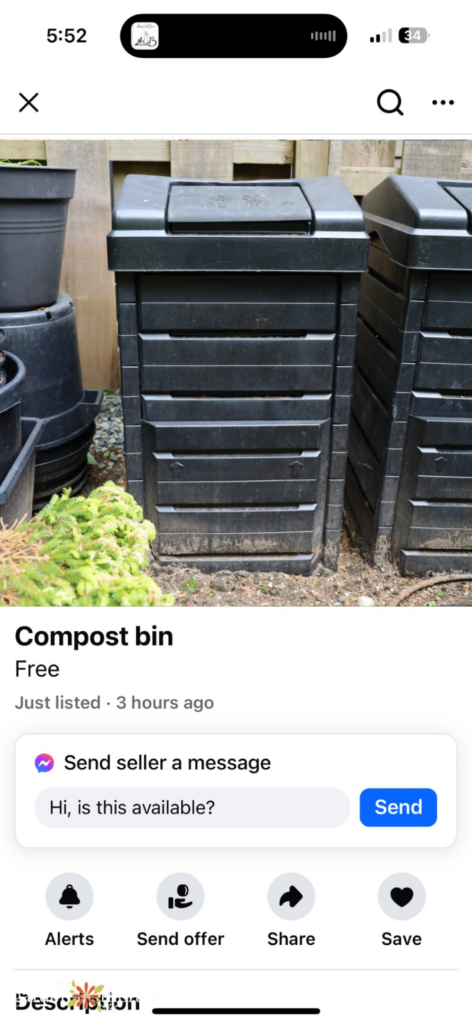
In some cases, this can be facilitated through an online platform. For instance, you may see a listing for something free online and reply that you’d like to come pick it up. It can also happen organically or through community events, like a book swap with your neighbourhood.
Some confuse the gig economy with the sharing economy. The gig economy is when you use peer-to-peer websites, like Uber or Airbnb, with the intention of making income.
The sharing economy is peer-to-peer, but it is more focused on sharing items to help someone out or to be more sustainable. The items are usually free or fairly inexpensive.
The Hidden Value of the Sharing Economy
It’s safe to say that we all have a lot of stuff. Our waste problem didn’t appear out of nowhere. It’s a byproduct of the consumerist world we live in.
The way we operate today relies on specialization. Each of us has been trained to specialize in one job. We’re really good at one thing, but have also lost a breadth of skills. Fewer of us know how to repair things, reinvent what we already have, and improvise solutions.
When something breaks or we need a tool, the easiest solution is to click and buy something new online.
But convenience isn’t always the best answer. Say you’re looking for a garden trowel. It may be inexpensive and arrive at your door within 24 hours, but it’s often low quality. It’s designed to be replaced rather than repaired.
That trowel could have been borrowed from a neighbour or bought second-hand. Or even found locally at a mom and pop shop where you can test the quality before buying it, while supporting a local business and connecting with people in the process.
When we buy everything through a screen, we miss the small human moments that used to come with everyday errands. Browsing the shop. Talking to the cashier. Bumping into someone you know.
The sharing economy is so much more than redistributing unused stuff. It’s about generosity and relationships. When we step outside and interact with others, we become more engaged, more curious, and more capable.
You’re no longer part of a system, but participating in your community. So yes, sharing is practical and inexpensive. But it is also a source of connection.
How to Participate in Your Local Sharing Economy
The number one way to get involved in your local sharing economy is to meet and befriend your neighbours. They’re the best people to have in your corner whenever you need to borrow something last-minute or for a one-time use when it makes no sense to own it yourself.
My neighbourhood group chat covers just a couple of blocks and has 80 people. I’ve sent messages before when I needed something, or see people offer up items they no longer use. I always love giving away my items there, knowing that someone else can make good use of them without having to spend a penny.
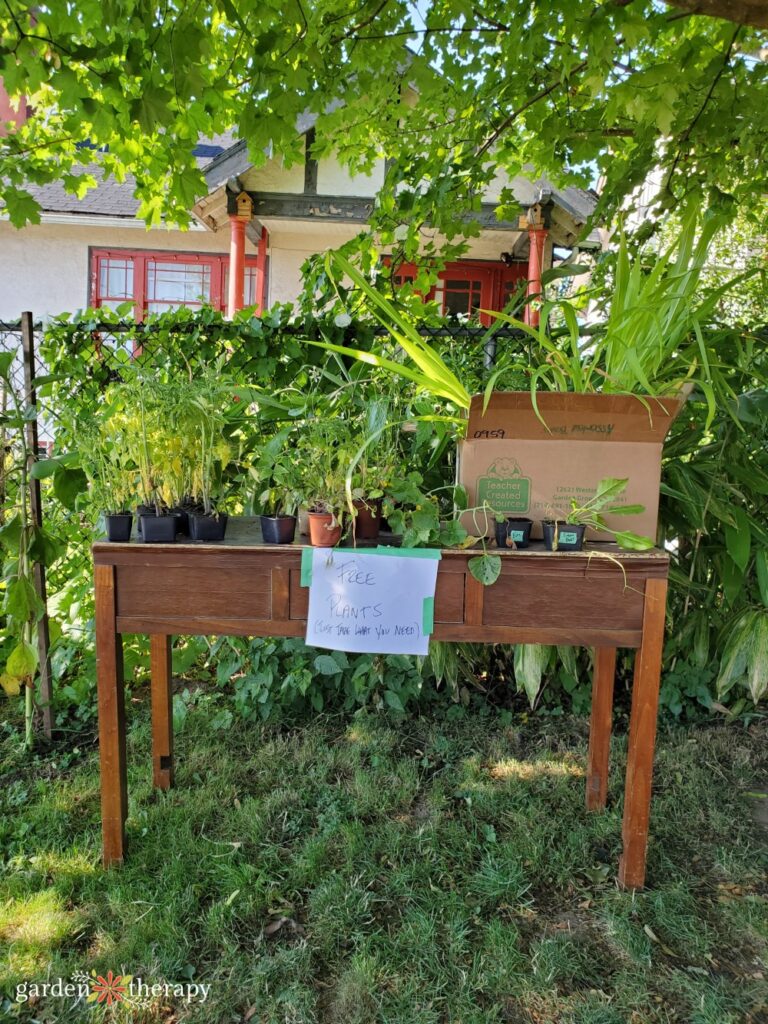
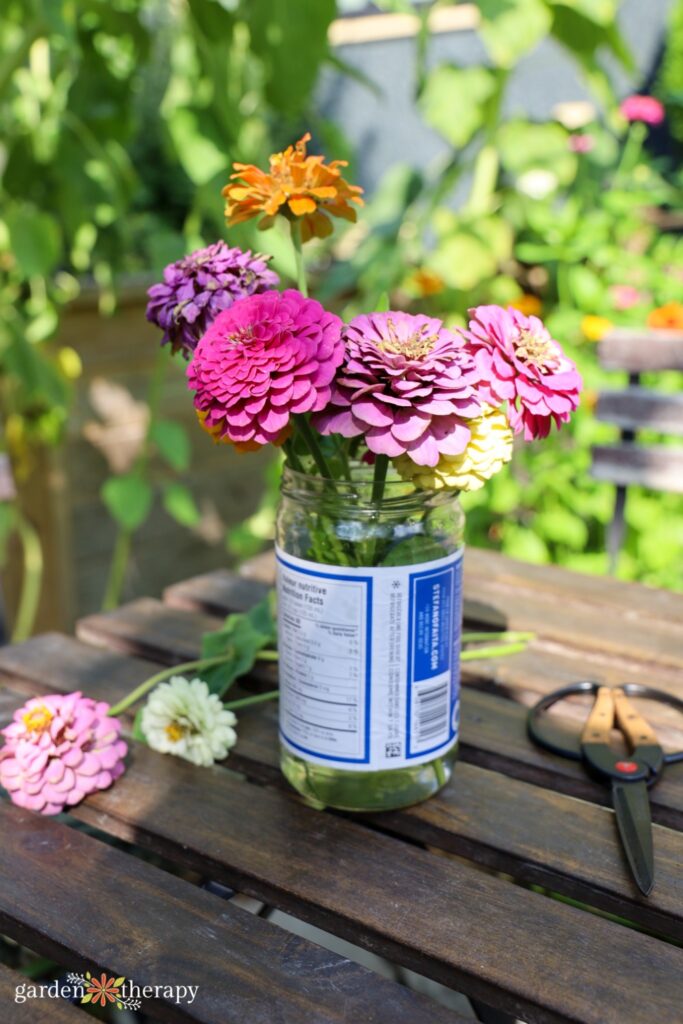
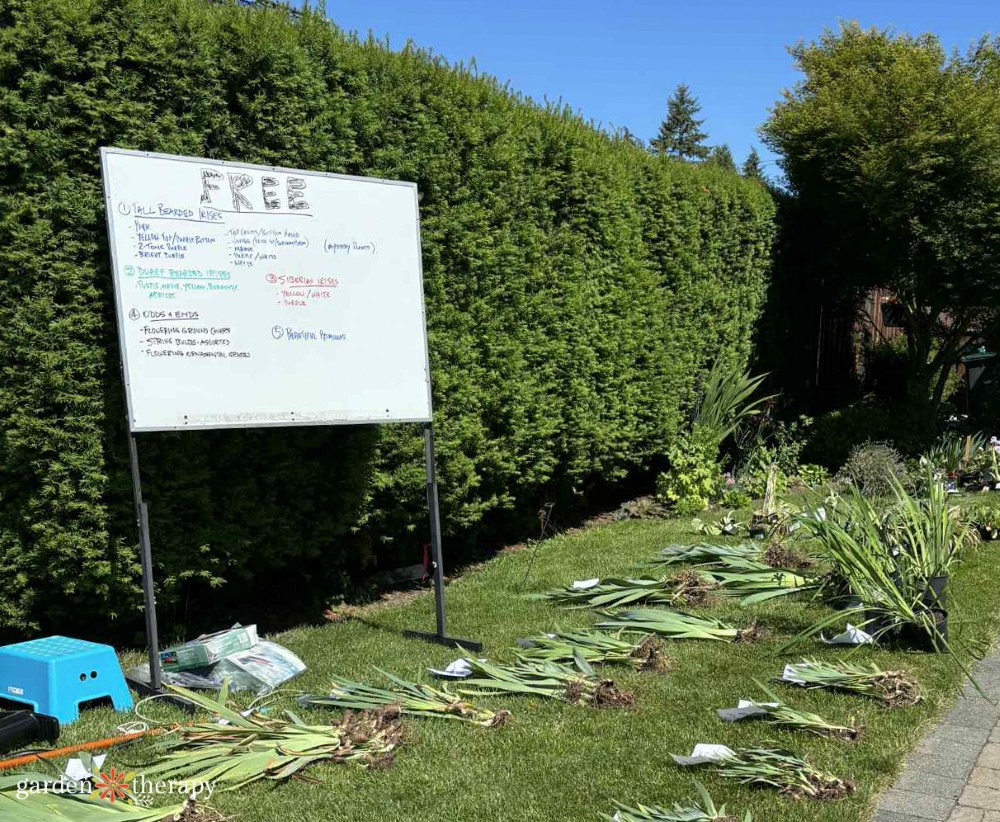
Keep an eye out for “sharing areas” within the community. I’ve seen community fridges, little free libraries (and seed libraries), extra garden produce posted outside, tool lending stations, and free tables.
Community centres or libraries are also great at organizing events to help bring people together to share their items and knowledge. I’ve seen clothing, books, and seed swaps regularly, where the only rules are to bring what you don’t need and take as much as you’d like.
Repair cafes and events are also becoming more popular. These are community events where volunteers donate their time to help you fix everything from a hole in your pants to a blender that stopped working. The idea is to reduce waste and fix what you already have.
Sharing Economy Platforms
Sharing economy platforms are websites or apps that help you source and give away items. The websites aren’t the service provider, but a facilitator. These can help break down the barrier to entry in the sharing economy and serve as very useful tools.
Here are a few I know about:
- Facebook Marketplace, Craigslist, and Kijiji: These are the classics, platforms designed to sell or give away items. Craigslist has a specific free section.
- Buy Nothing Groups: These are hyper-local community groups that allow you to connect with your neighbours to list and take items for free. You can join through Facebook groups or their app.
- Freecycle: Similar to Buy Nothing, this is a website to give away and grab free items. It’s more citywide than within neighbourhoods themselves.
- Nextdoor: This app is a neighbourhood networking tool used to find news and events, as well as sell and list items.
- Bunz: An app designed specifically for trading items. No selling, only bartering.
- Karrot: Another app to help you buy and sell used items.
- TrustedHousesitters: This platform connects those looking for someone to housesit or petsit with those looking for a place to stay, such as travellers or digital nomads. Note that there is an annual fee to use the platform itself.
What I especially like about some of these apps is that they’re not just closing the loop on waste but linking neighbours into friends. Or at the very least friendly!
Rather than leaving items on porches or in the back alley for pickup, try to meet people at the door. Let them say thank you in person, put a face to a name, and begin to interact within your community once again.
Let me know how you use the sharing economy by leaving a comment.
More Ways to Get Engaged Locally

A city girl who learned to garden and it changed everything. Author, artist, Master Gardener. Better living through plants.
