
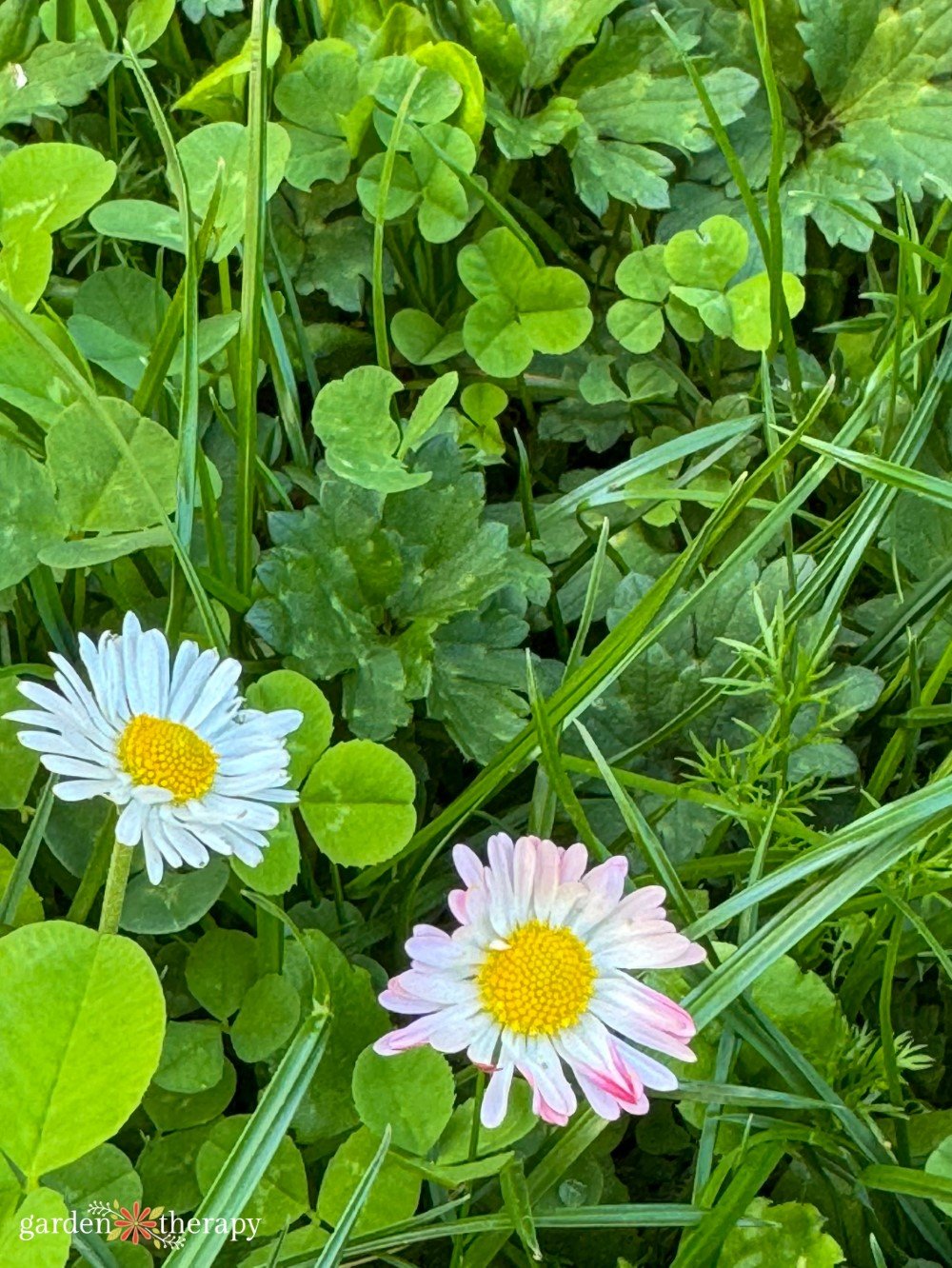
Turf grass rose in popularity as a way to show off wealth and status, and somehow has become the standard for today’s garden culture. But what if I told you there are better, more eco-friendly options? Ones where you don’t have to mow, water, fertilize, or worry about pests. Let me introduce you to some alternative lawn options.
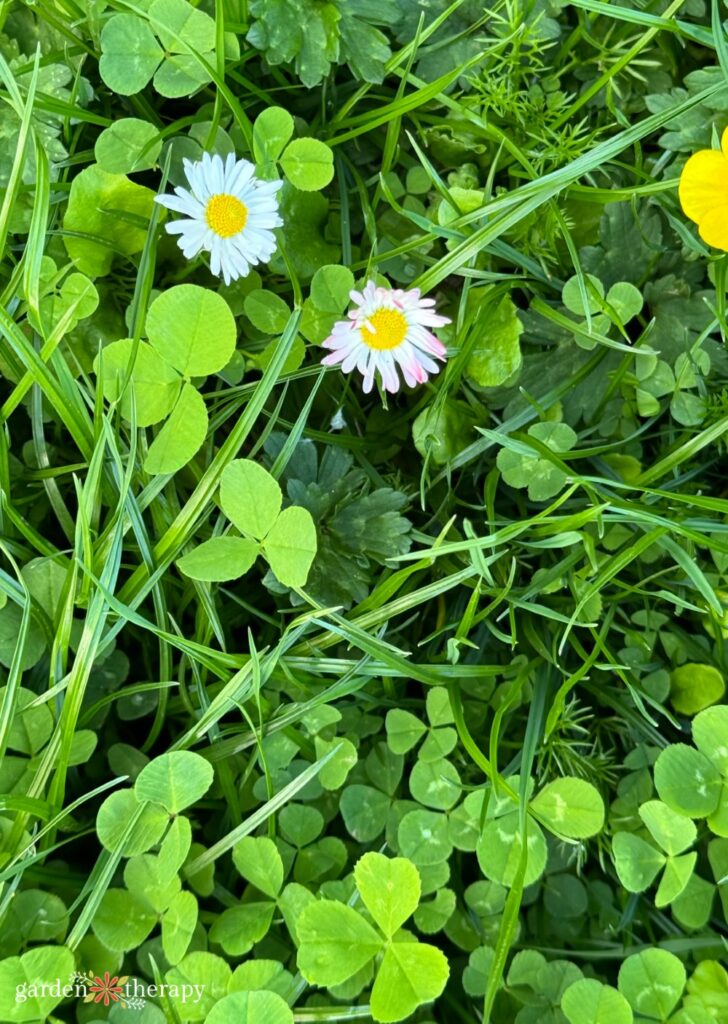
My lawn care journey has been a marathon, not a sprint. Having moved a few times in my adult life, I’ve dabbled in many different lawn solutions and the problems that go with them.
When Kiddo was young, I had a section of traditional turf lawn so he could easily play outside. Even then, I didn’t use any fertilizer, herbicides, or pesticides.
In the next house, Kiddo was a little older, so I didn’t prioritize having a lawn. And the second I no longer focused on turf grass, I said goodbye to high-water use, frequent mowing, pests, and all-around upkeep.
Traditional turf lawns simply don’t hold much ecological value, not to mention how much time and money they suck from us. If you’re able to go without one, I promise you won’t miss replacing it with an alternative lawn option.
In my current house, I have the pleasure of having two different kinds of alternative lawns. The first is my meadow-like, eye-catching wildflower front lawn, which I’ve talked about extensively on the blog.
My other is a turf replacement blend including clover and small wildflowers, which has become an excellent replacement for the patchy lawn the house had when I first moved in.
If you’ve been dabbling with the idea of switching to an alternative lawn, let me show you my experience, what you can expect, and tips for planting your own.
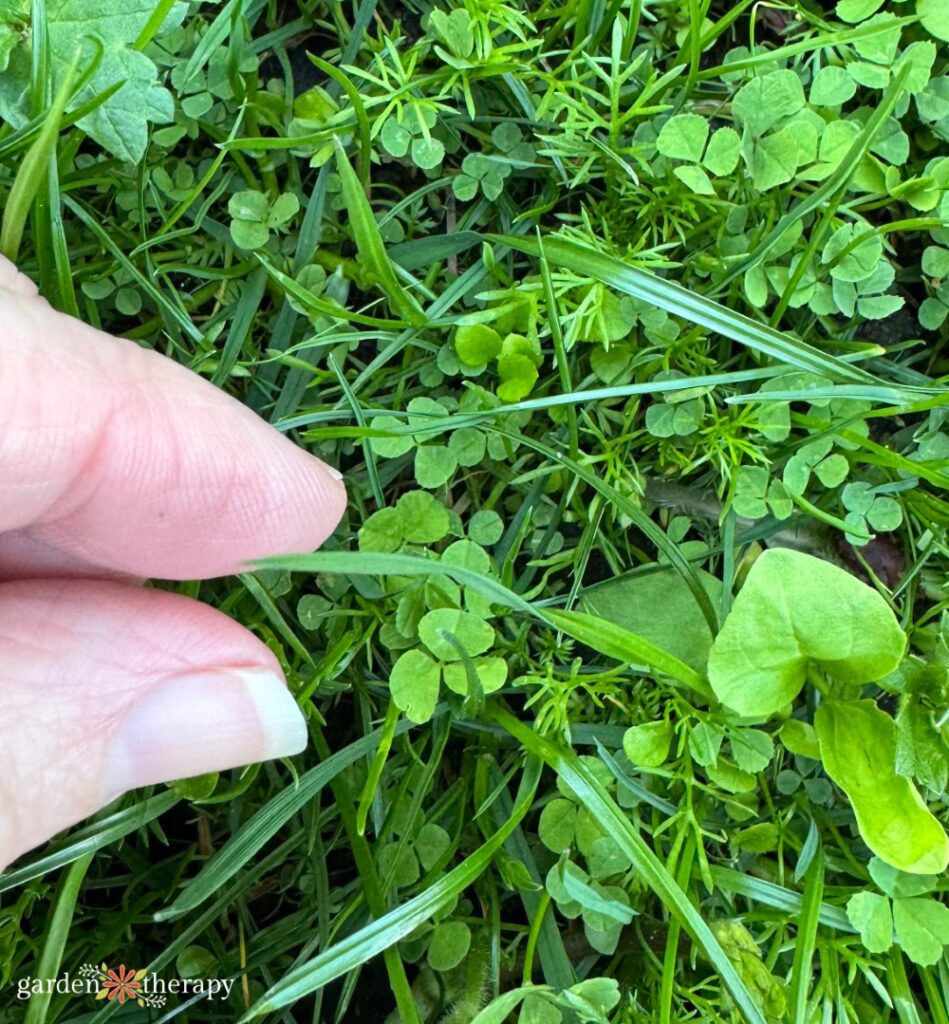
Alternative Lawn Bee Blend
In my backyard, I use the Bee Turf from West Coast Seeds. This mixture, which is designed to replace conventional lawns, is a mixture of clover and low-growing wildflowers.
It’s ideal for urban homes, with the aim to provide habitat and food for pollinators, while also being eco-conscious and low-maintenance for homeowners.
The blend includes:
- White Dutch Clover (Trifolium repens)
- Sheep Fescue (Festuca ovina)
- Western Yarrow (Achillea millefolium)
- Microclover (Trifolium repens var. Pipolina)
- Baby Blue Eyes (Nemophila menziesii)
- Sweet Alyssum (Lobularia maritima)
- English Daisy (Bellis perennis)
- Roman Chamomile (Anthemis nobilis)
- Perennial Ryegrass (Lolium perenne)
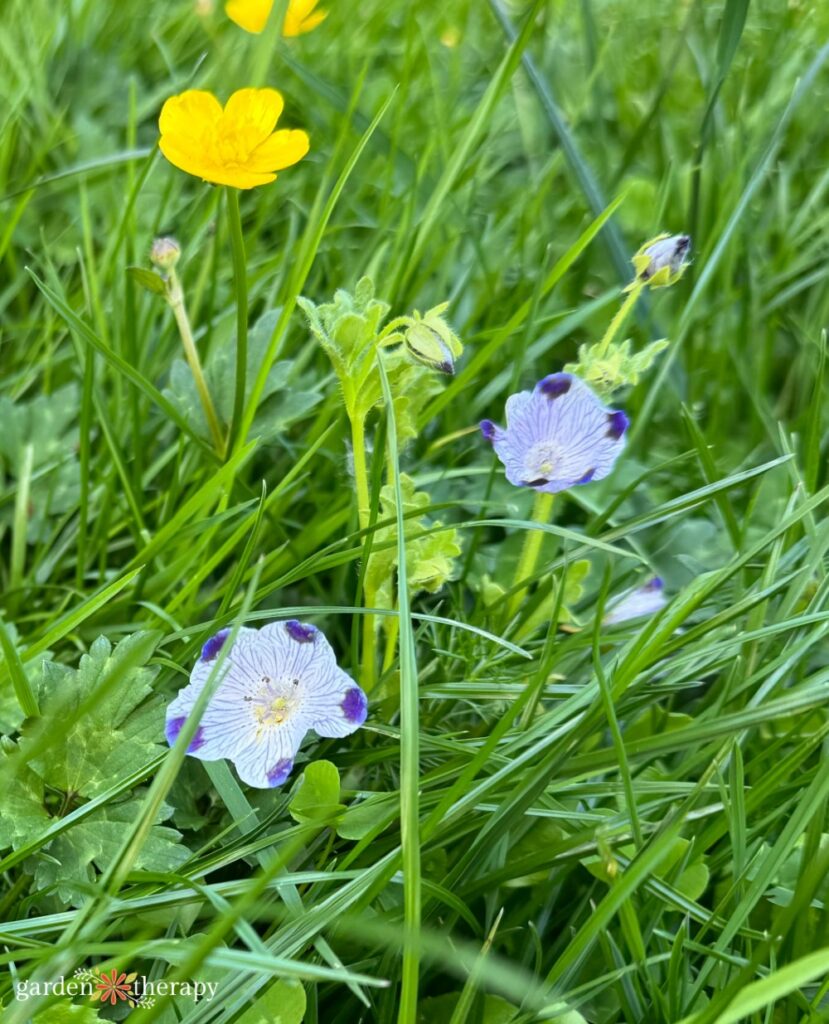
My Experience With the Blend
While my front yard can be wild and beautiful, I knew that my backyard would need to be more walkable. The Bee Turf worked really well for me as a turf replacement.
Rather than covering the entire lawn, I mixed it in with the existing lawn by using it to cover patches. Every year, I use it to repair these patches, and it’s really filling in the spots nicely.
Here’s “before” planting.
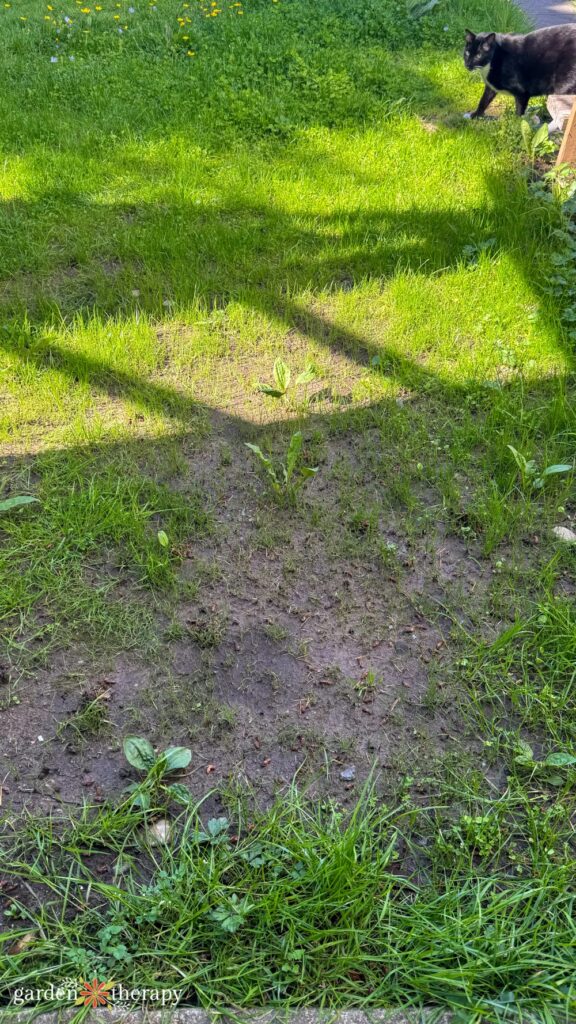
While it’s meant to replace conventional lawns, you don’t want to sow directly on the lawn. You won’t get success this way. Mine has taken so well because I go to those patchy areas, add a layer of soil, and then sprinkle the seeds.
The blend grew best for me in areas with full sun.
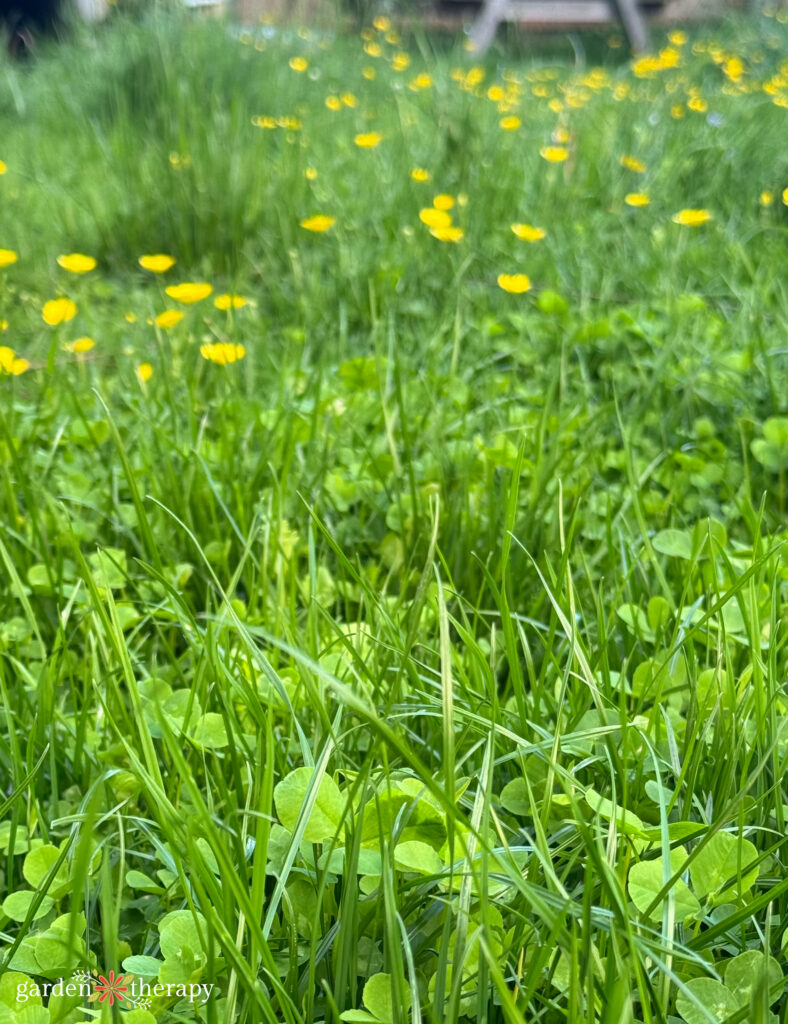
Overall, I’m mowing and watering less, and you won’t find me applying any kind of fertilizer to the lawn. It’s also resistant to weeds and chafer beetles. And I love getting to see all the bees, butterflies, and other pollinators flit about.
Here’s “after” planting.
What to Expect With Alternative Lawns
You can’t expect your alternative lawn to behave like a turf lawn, nor will it require the same care as a turf lawn. So it’s important you go in with the right expectations!
Mowing
One of the biggest appeals for alternative lawns is not needing to mow nearly as often. Yes, you will still need to mow the lawn, but you won’t have to do it as often as a turf grass.
The blend and type of alternative lawn will greatly affect how often you need to mow. For instance, my wildflower lawn I don’t mow at all because it’s not being walked on.
Meanwhile, my bee blend I mow about once a month to get a more manicured look. I could also let it get to 5” tall if I’m looking to help the pollinators.
My blend grew very tall along the fence, and already needs to be mowed by early spring. It acts like any other perennial grass, so it’s important to consider all the blend ingredients.
Height
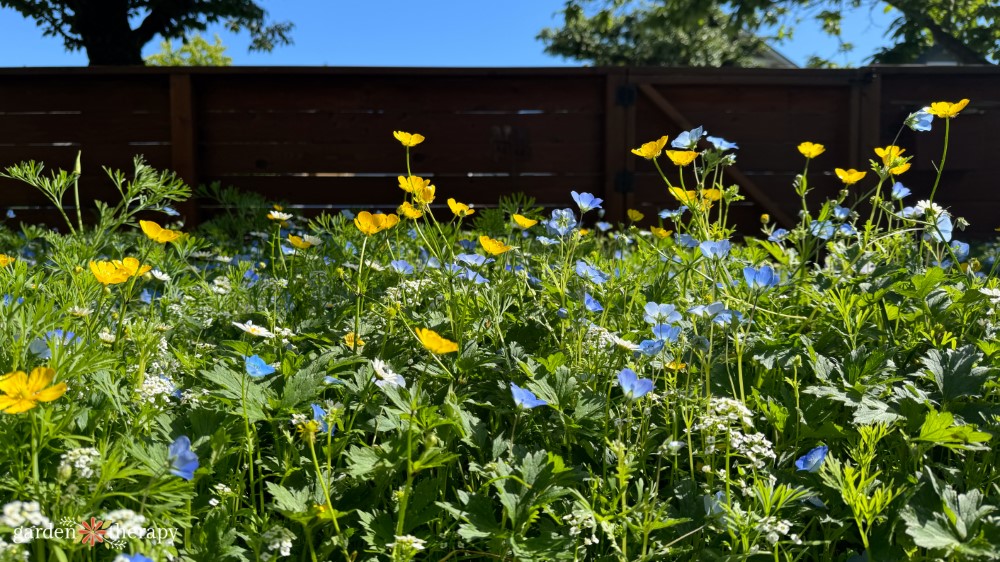
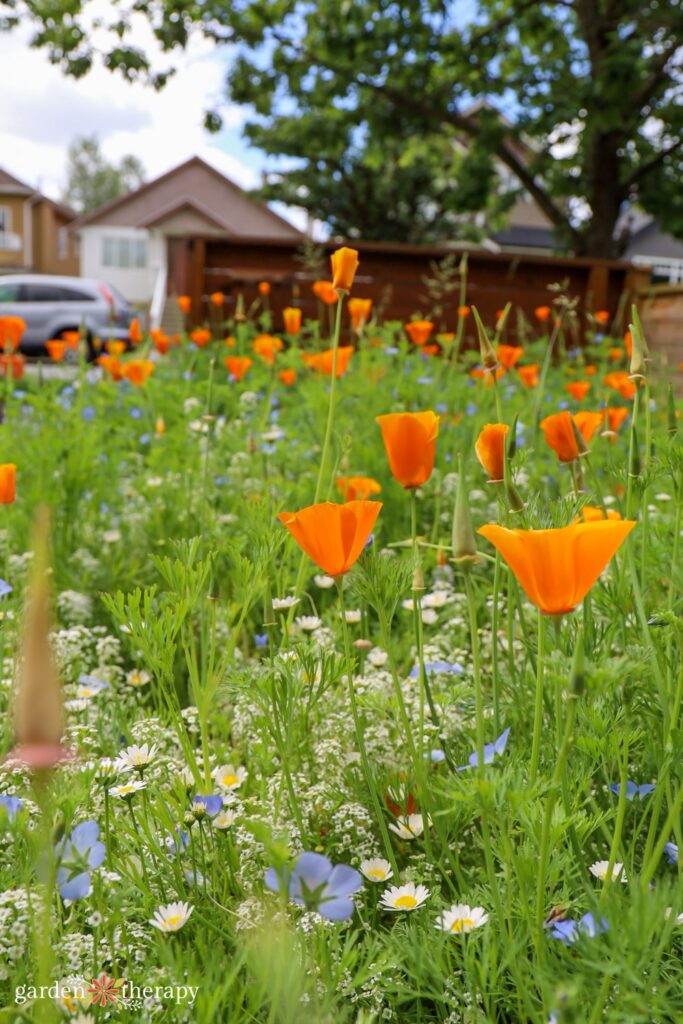
Similar to mowing, different blends and plants will reach different heights on average. My wildflower lawn acts as a meadow, and it’s not for walking. It can get up to 2 ft. high when the poppies are in bloom.
So ask yourself, do you want a garden or a lawn?
If you need something treadable, make sure you look for a turf blend. These are meant to replace conventional lawns.
Plant Diversity
When planting a blend, you have to know that you won’t get a perfect share of all the ingredients. What thrives will depend on your specific sun, water, and soil conditions.
In my experience, about 20% of the listed ingredients will be in the most abundance. The point of the blend isn’t to have an equal portion of seeds, but to create a polyculture.
Your neighbour down the street could have the exact same blend and have different seeds thriving than you. You can learn a lot about your conditions based on the seeds that germinate and those that don’t.
Tips for Planting an Alternative Lawn
The most important thing you can do is carefully follow the planting instructions listed for your blend. I’d recommend planting in fall or spring, since most blends need a soil temperature of 10 °C to be successful. By summer, it will be too hot.
Do not seed over existing lawn or turf. The seeds need direct contact with soil. For best results, you’d want to remove as much pre-existing vegetation as possible.
For my wildflower lawn, I covered the old (failing) turf with a 3” layer of topsoil. For my bee turf, I’ve been adding some topsoil to my patches and then seeding. You can use soil, compost, or a mix of sand and soil.
The soil needs to be damp for germination and the seedlings. You can be like me and purposely plant just before rainfall for great results without needing supplemental water.
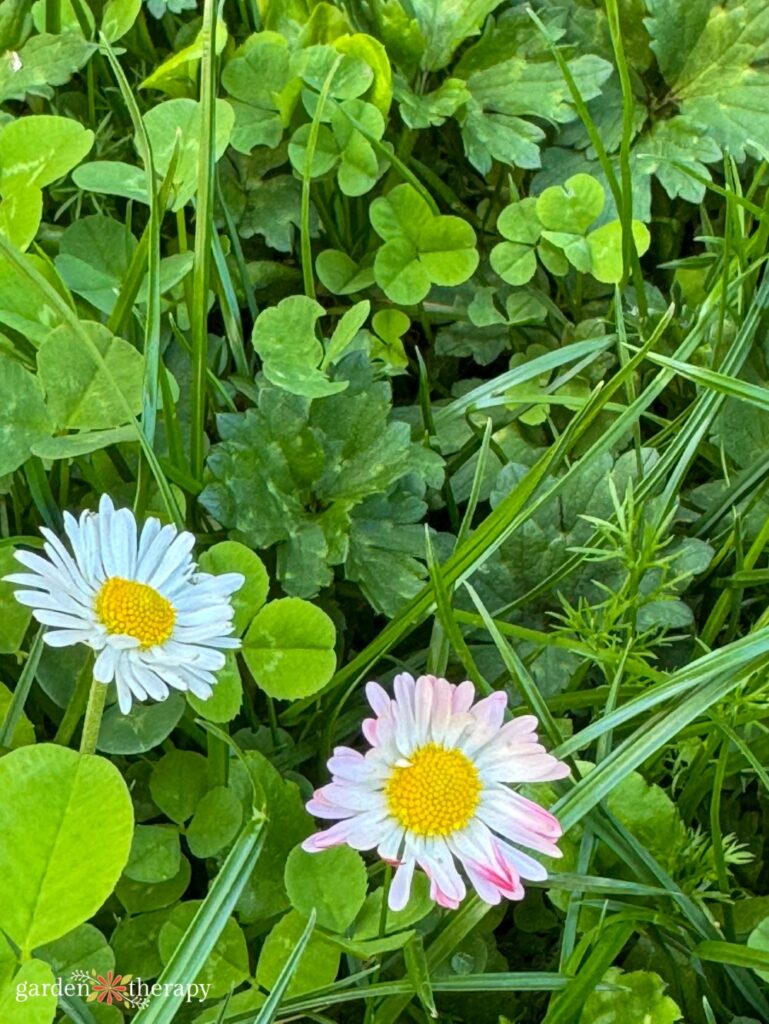
Most turf grasses, even the alternatives, need full or partial sunlight. Most will struggle to fill in shady spots. If you want to try growing in the shade, look for a clover blend or ideally one that is labelled as a shade blend.
Other Alternative Lawn Options
Wildflower Lawn
I’ve already been gushing about my gorgeous, beautiful, stunning, and wildflower lawn (can you tell I’m obsessed?), but let me tell you why I chose it for the space.
For my front lawn, I didn’t have to worry about making it super treadable. I have one main path to my front door, a little front patio, and a dry river. Everything else could be wildflower lawn. I planted the Alternative Lawn Wildflower Blend from West Coast Seeds.
The biggest benefit is how much it has helped engage my community. I’ll often sit in my little patio out front and drink my morning coffee. People will stop and admire the lawn, and it’s a great conversation starter.
It feels more like a garden or meadow than a lawn. Which, for the pollinators, is a huge plus. It also means I don’t mow it whatsoever, so as not to interfere with the succession of flowers. What blooms in May is different than what’s blooming in August.
The flowers also last an incredibly long time in my Vancouver climate. I’ve enjoyed daisies in winter!
I have a whole post dedicated to my wildflower lawn, where you can learn more about how I planted and cared for it.
Ground Covers
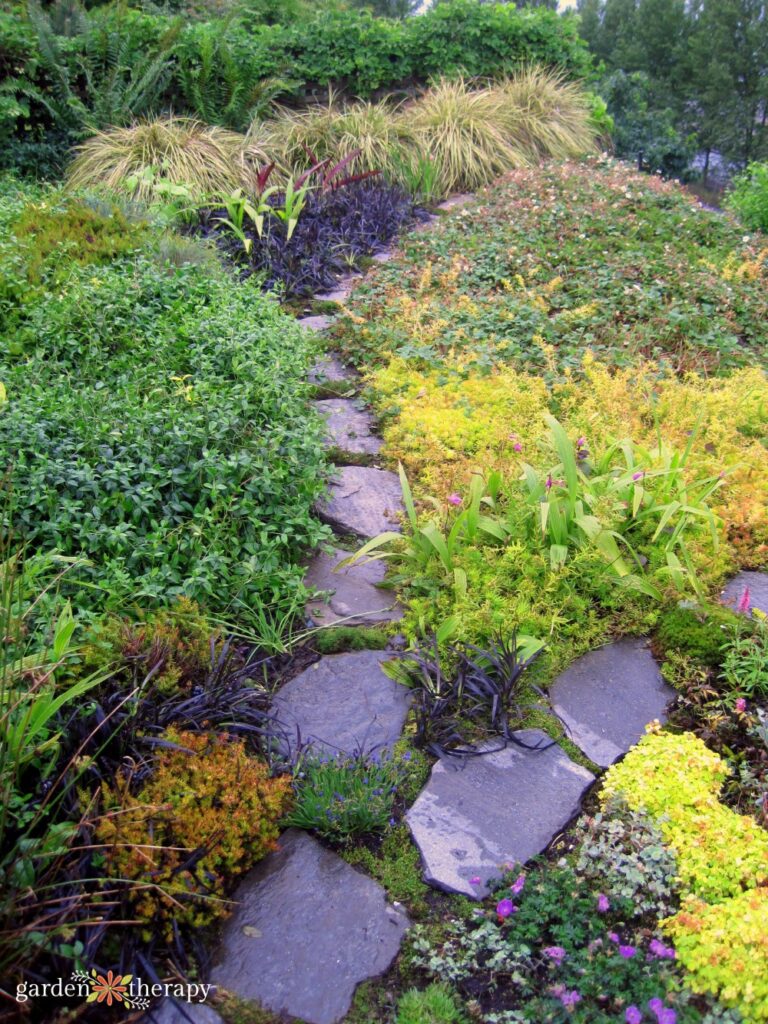
It’s so stunning to have a patchwork of colourful, low-growing plants to cover your garden. Carpet gardening, if you will!
Like the wildflower lawn, ground covers aren’t meant to be a lawn replacement. They’re a selection of plants that can fill a garden bed, between stones and pathways, or an entire lawn, should you wish.
There are many shade-loving ground cover plants you can choose from, which is why I recommend this for those who are struggling to grow a lawn in shade. Why fight and try so hard to grow something that doesn’t want to grow there, when you can have a beautiful carpet garden instead?
This post has a great selection of ground cover plants for both the sun and shade.
I’d love to hear about your lawn. What kind of lawn do you have or are thinking of converting to?
More Green Lawn Care Advice

From Vancouver, BC, Holly is Garden Therapy’s Content Manager. She has a BFA in Writing from the University of Victoria as well as a diploma in Floristry Design from Burnaby CCE. At home, she loves to grow cut flowers and dried flowers for her business, Dirty Daisy Florals, and is an avid houseplant collector and lover of bees. You can find her at @dirtydaisyflorals and @hollyheuversocial.
