
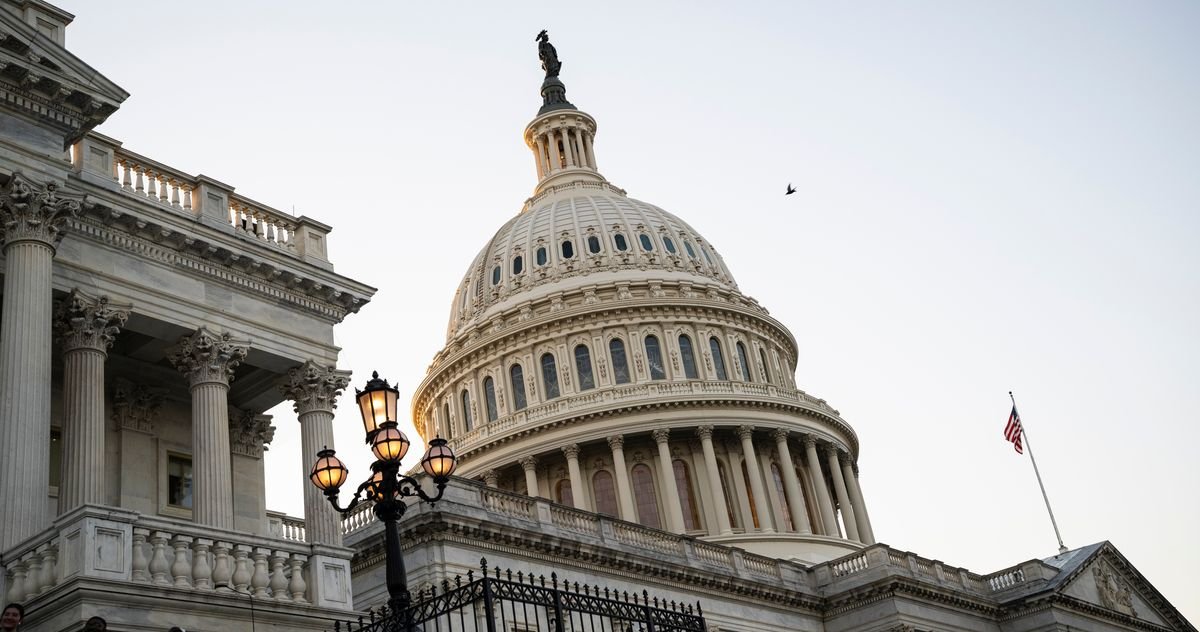

Photo: Graeme Sloan/Getty Images
It is hard to overstate the seismic effect on the U.S. political system of the U.S. Supreme Court’s decision in Louisiana v. Callais. It gutted Voting Rights Act protections for minority representation in legislative bodies that had slowly but surely enabled Black voters to climb out from beneath the legacy of the Jim Crow South. At the same time, Callais (in combination with earlier Roberts Court decisions banning judicial interference with partisan gerrymanders) actively, even aggressively, encouraged instant and recurring legislative gerrymanders wherever a political party — more often than not, the GOP — had the power to carry one out.
In the short term, Callais revived flagging Republican hopes that gerrymanders could so drastically tilt the playing field that the GOP could maintain control of the U.S. House in November even if it loses the national House popular vote by a significant margin (as it probably will). But the longer-term effects will be even more significant. Unless current GOP state government trifectas are disrupted, it’s clear Republicans will go on a remapping binge prior to the 2028 and 2030 elections, then again after the 2030 census reapportions congressional seats (likely to the benefit of the sunbelt states they dominate). In particular, majority- and plurality-Black (and in some places Latino) districts will be decimated without mercy. And it’s equally clear Democrats will retaliate wherever and whenever they can, just as they did so very rapidly in California and Virginia this time around.
A gerrymandering arms race will likely become a regular feature of American politics every year or two. And the victims will be not just the minority voters who will be denied representation but minority-party voters in both red and blue states who could suffer de facto disenfranchisement for years.
Worse yet, there will be no simple way to reverse this devolution. Callais didn’t just gut the Voting Rights Act of 1965; because it’s a federal constitutional ruling, it would prevent implementation of any congressional effort to reenact similar legislation. There’s already talk among prominent Democrats of trying to put the genie back into the bottle via court-packing, which could reshape the current Supreme Court or intimidate it into a less reactionary stance. But that’s the longest of long shots, requiring not just a Democratic trifecta in Washington but one that lasts long enough to prevent a quick reversal.
If Democrats want to mitigate the baleful effects of Callais and stop a downward spiral into a Congress and state legislatures ruled ruthlessly by partisan majorities, they need to think very big. And as it happens, there is one reform that is adequate to the task and suddenly relevant and realistic. It involves abandoning the current single-district, first-past-the-post election system in favor of an arrangement that makes gerrymandering impossible and, as a huge added benefit, addresses the growing and dangerous disgruntlement with the current party system.
The idea, as laid out by longtime advocate Lee Drutman of New America, is a system of multimember districts elected by proportional representation, as is the practice in approximately 130 countries, including most of Europe. Drutman explained how it would work at The New Republic, using Kentucky as an example:
Kentucky would be roughly two-thirds Republican, one-third Democrat. So in a proportional system, that would be two Democrats and four Republicans. But because of the way that the district lines are drawn, Democrats are all pushed into one district, more or less—one safe district for Democrats and five safe districts for Republicans.
Now, what makes that possible? The fact that there are a bunch of different lines that you can draw. Now, imagine an alternative world—perhaps our future—in which Kentucky is just one six-member district. Everybody votes in the same election as you do for Senate, and parties put forward lists of candidates. So Republicans put forward a list of candidates, Democrats put forward a list of candidates. Democrats get 33 percent of the seats—the two most popular Democratic candidates on that list go to Congress. Republicans put forward a list of candidates—the four most popular Republicans go to Congress.
So that’s proportional. That’s what we think of as fairness. You don’t have to draw any district lines, and candidates run on party lists, and parties get representation in Congress in proportion to the share of votes that they get—which is a very intuitive sense of fairness.
There are no districts, and thus no gerrymanders, and no one (assuming there are enough seats to share) is disenfranchised. Interestingly enough, a proportional representation system of this sort would both strengthen the parties by giving them power over candidate lists and eliminate the major-party duopoly, since minor parties with enough votes would earn representation without having to win a district. And indeed major-party factions unhappy with party leadership could form their own parties, making coalition governing both feasible and sometimes essential.
Drutman would go further to reform statewide elections by national adoption of “fusion voting,” currently utilized in New York and Connecticut, allowing candidates to run on multipleparty ballot lines. This system allows for more choices for ideologically inclined voters, but at the same time encourages multiparty governing coalitions.
All this sounds like pie in the sky, if not “un-American,” right? Actually, there is nothing in the U.S. Constitution that mandates either single-member congressional district or first-past-the-post balloting. A 1967 congressional statute requires single-member districts. Legislation to repeal or replace it would arguably be easier to enact that some blatantly partisan Court-packing scheme or a ban on partisan gerrymandering that might not pass judicial muster.
It’s possible that Callais’s impact is so dire that it would make such radical reforms suddenly possible and perhaps even palatable across party lines. When it comes to gerrymandering, we are clearly entering the “hyper-partisan doom loop of escalating division and polarization” that led Drutman and others to embrace proportional representation and fusion voting. Donald Trump is the perfect expression of the prevailing style of politics, and Democrats who fear and despise him should think hard and think big about how to escape the poison.
