

Photo: Ella Hall/Getty Images
The partisan gerrymandering frenzy underway in a number of Republican-controlled southern states threatens to decimate Black representation in Congress and state legislatures. The NAACP isn’t confining itself to conventional countermeasures in its response. Presumably, the civil-rights group will eventually sponsor voter-registration drives, public-education initiatives, and get-out-the-vote efforts. But right off the bat, the NAACP is going for the heart and the wallet of the white conservative Deep South, as the organization announced yesterday:
The “Out of Bounds” campaign focuses on one primary ask, calling on top football and basketball recruits currently being actively recruited by targeted programs to withhold their commitments until the states in question restore fair congressional maps and meaningful Black representation. The campaign also calls on current college athletes — including those who may already be enrolled at targeted programs — to consider their options, including the transfer portal, and to use their platforms and NIL [name-image-likeness compensation] reach to elevate fair maps and voting rights.
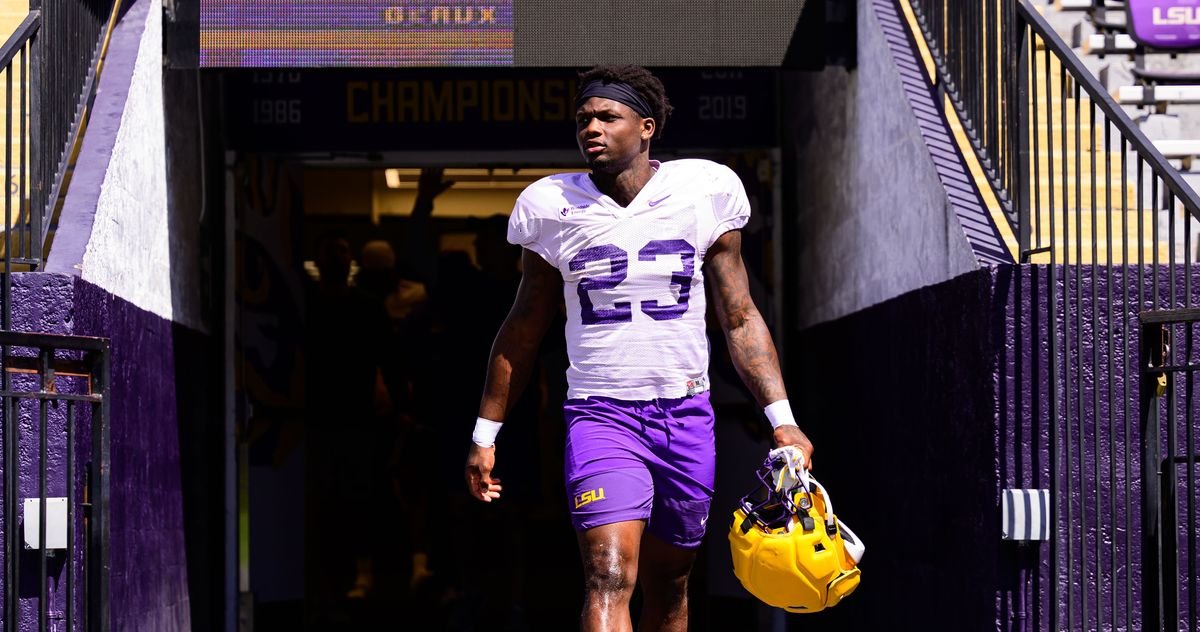
Athletic programs subject to this boycott will be those with more than $100 million in annual revenues at “public flagship universities” in eight states: Tennessee, Louisiana, Alabama, Florida, Mississippi, South Carolina, Texas, and Georgia. A separate NAACP document enumerates the target institutions. From the Southeast Conference, the boycott affects the University of Alabama, Auburn University, the University of Florida, the University of Georgia, Louisiana State University, the University of Mississippi, Mississippi State University, the University of South Carolina, the University of Tennessee, the University of Texas, and Texas A&M University. From the Atlantic Coast Conference, the targets are Clemson University and Florida State University.
This is big-time college-football and -basketball country we’re talking about. As a money-generator alone, it’s huge. SEC schools distribute nearly a billion dollars per year in revenues just from TV fees, mostly from football. The NCAA’s March Madness men’s and women’s basketball tournaments are viewed by tens of millions of people each day of the extended event. Money aside, southern college football is a famously intense experience (viz. the SEC’s motto: “It Just Means More”) central to state and regional identities. A sizable majority of college-sports fans are upscale white folks, while a disproportionate number of participants are Black. The national numbers show 44 percent of men’s basketball players and 40 percent of football players are Black, and the percentages are definitely higher among the most prominent players and even higher in the South.
Will the boycott work? That’s hard to say. The NAACP is encouraging both athletes and fans to redirect their dollars and their support from the targeted schools to HBCUs (heavily concentrated in the South). But HBCUs do not compete at the higher levels of college football and are far less likely to offer the player compensation (revenue-based grants and NIL deals) that is now driving major college football and basketball. Will Black athletes make a personal sacrifice for the political goals of the NAACP? Some may, but many won’t unless the boycott truly takes off.
More likely, such a boycott would redirect Black athletes to major football and basketball programs outside the targeted programs; indeed, you can imagine schools like Ohio State, Penn State, USC, and Duke — all blue-bloods of the college sports world — using the boycott in “negative recruiting” of premier Black athletes. Perhaps that will increase the pressure on the targeted programs and the states where they are located, but is it fair and rational? Is deep-red Ohio really less racially benighted than purplish Georgia? How about even deeper-red Oklahoma and Arkansas, which have no majority-Black congressional districts to extinguish?
Whether the “Out of Bounds” initiative takes off, flounders, or is modified in some material respect, it’s pretty clear the NAACP will get the attention of an awful lot of southern people who would otherwise be indifferent to Republican gerrymanders and voting rights. It won’t be a subject of discussion just in November, when voters vote, but in September, when college football kicks off, and in March, when college basketball goes mad. And it will also come up year-round in the intense recruiting competition for top-shelf athletes in the big-money sports. Millions of passionate college sports fans who live and die by their teams and their traditions will be watching and listening with trepidation, and perhaps some heightened awareness of the wages of racist sin.
