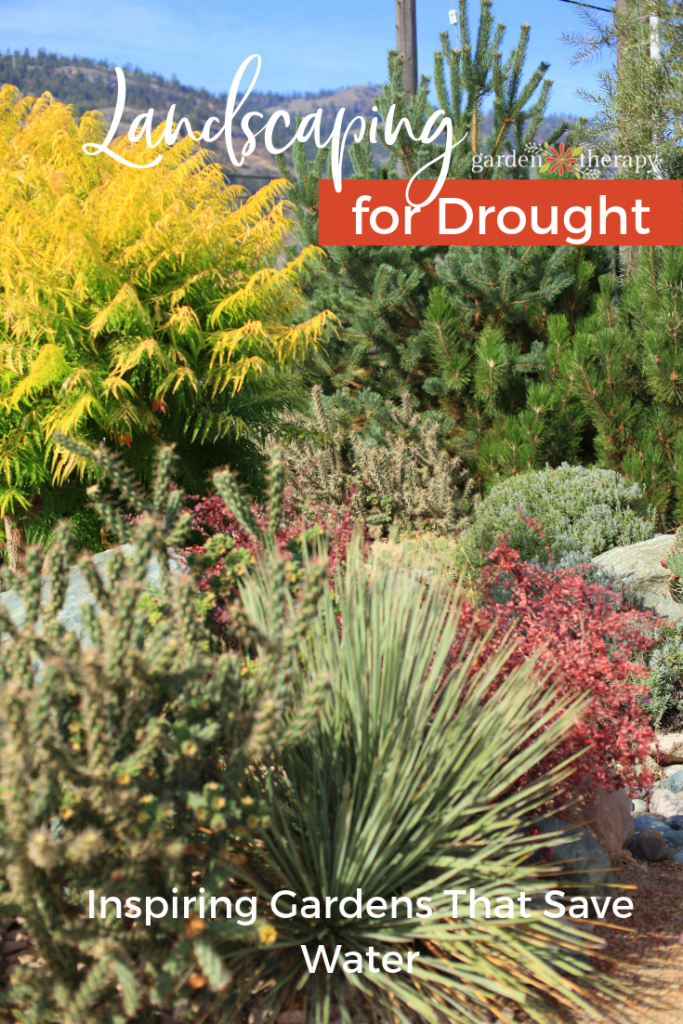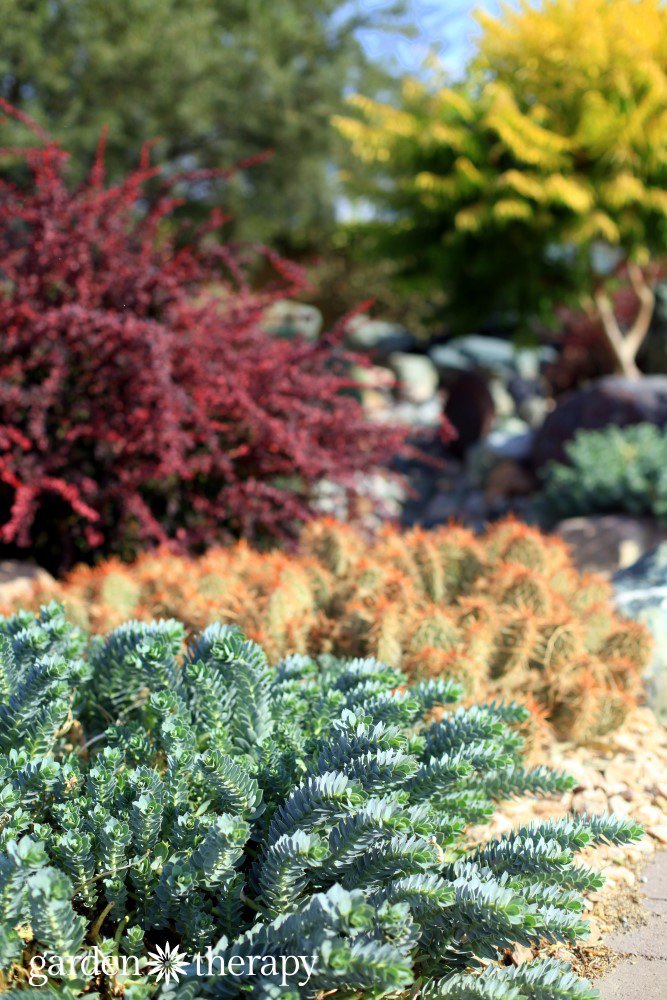
I learned a lot about designing drought-tolerant gardens and xeriscapes while I was vacationing in Osoyoos, BC. The thing that stood out the most was that you can have a colourful garden, full of flowers and wildlife, that requires much less water. Join me on a tour of drought-tolerant landscapes and pick up some water-wise ideas for your own garden.
I live in a rain forest. Well, I used to live in a rain forest. I’m not sure the powers that be are quite ready to change the classification of our climate just yet, but it certainly is changing here in Vancouver, BC, Canada. Winters are milder, and summers are considerably drier than they used to be.
This hasn’t yet fully changed the landscape the way it has in California (with the exception of areas damaged by wildfire, which have also increased with the dry summers), but what it has done is made a lot of us who live here think more about the value of water and water conservation.
Water resources are dwindling around the world, according to a recent 2026 report by the United Nations University. More than half of the world’s largest lakes have lost water since the 1990s, and nearly 75% of the world’s population lives in countries classified as water-insecure or critically water-insecure.
What Makes Osoyoos Special
Visiting Osoyoos showed me that you can have gorgeous landscapes and fabulous gardens with plenty of plants that support wildlife and beneficial insects, all while preserving precious water.
While I live in a rainforest, Osoyoos is just a few hours away and has a completely different climate.
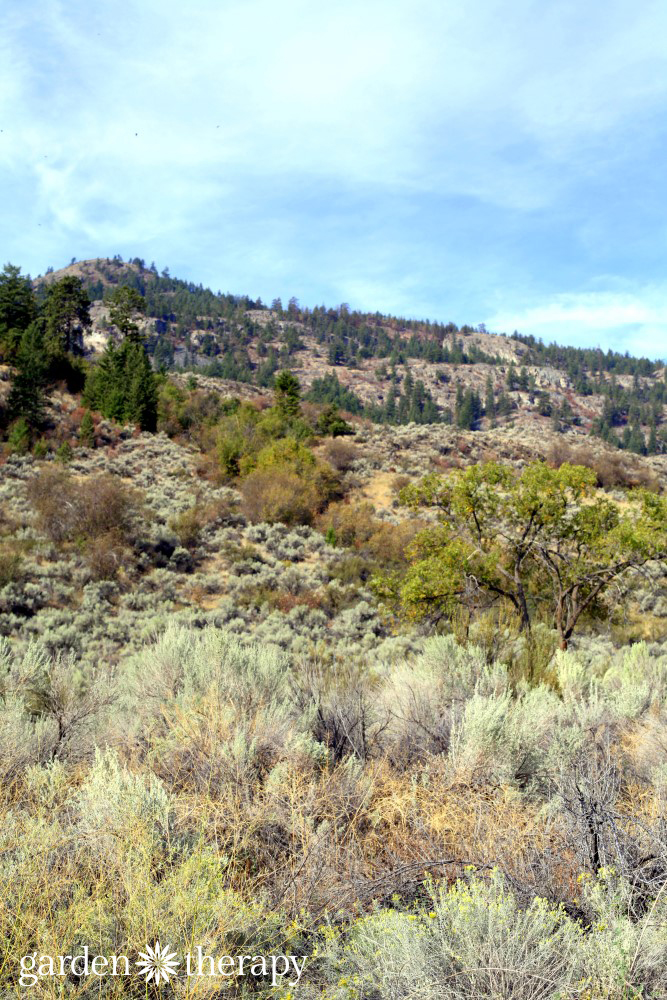
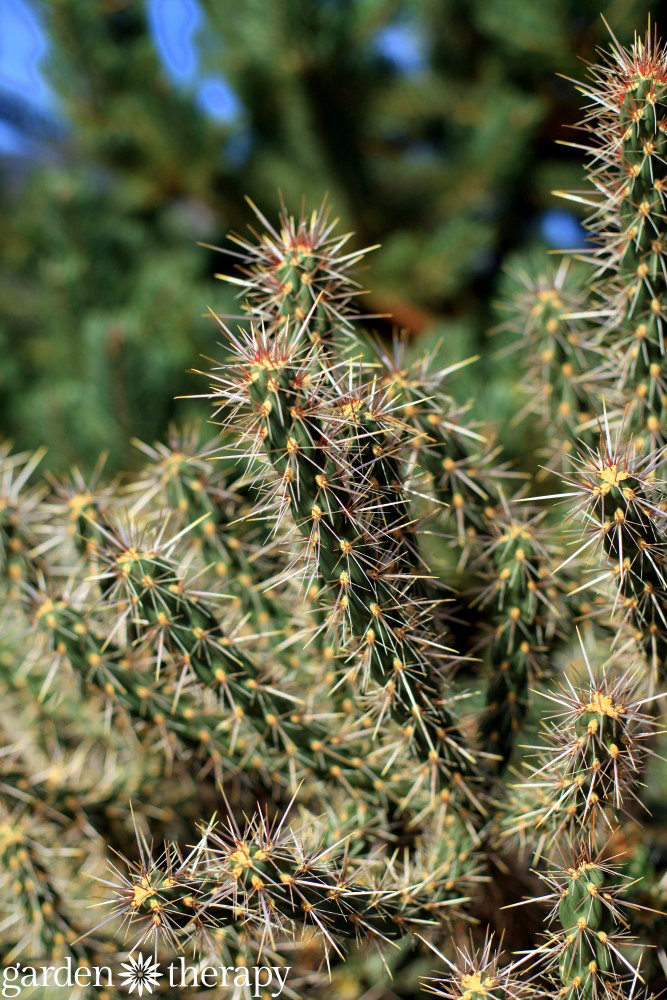
It’s semi-arid, with a unique xeric shrubland and a rather rare desert ecosystem for Canada. It’s home to the warmest freshwater lake and has the lowest annual precipitation in the country (just 25 cm). In the summer, it’s one of the hottest areas in Canada, where day temperatures of +30°C (86°F) are common.
Preparing for Drought
Changing our gardens and the way we garden is the best way to adapt to changing climate demands. I must stress that removing gardens altogether and replacing lawn with plastic turf is far worse for our environment than adapting to drier climates and changing water supply.
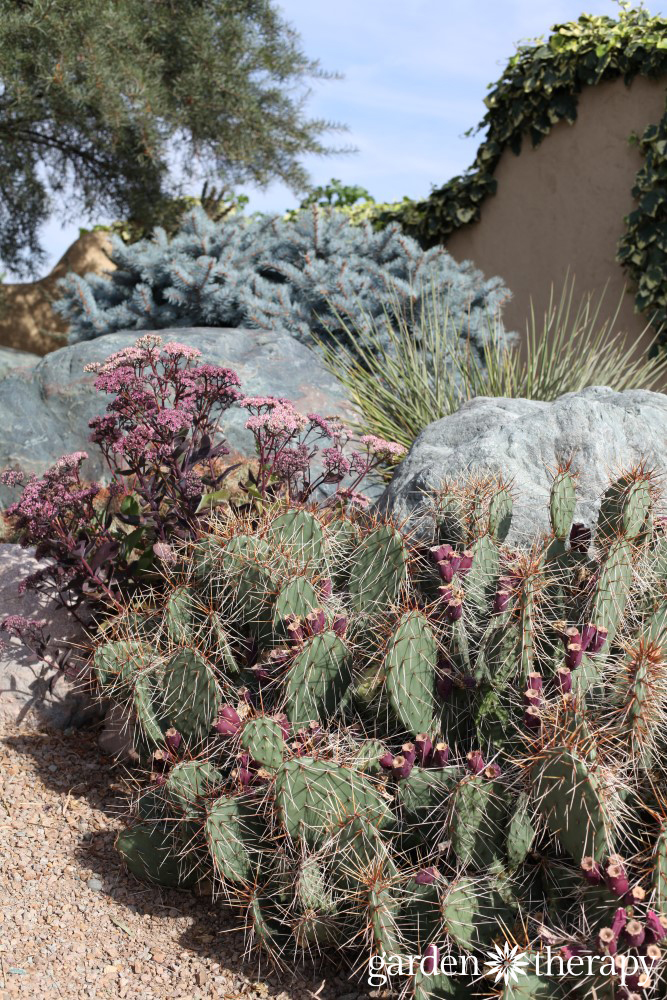
There are many options for making your home garden more water-wise. Choose drought-tolerant plants like succulents, cacti, and these hardy perennials. Collect rainwater in a barrel and use that to water your plants as much as you can. Use mulch to retain moisture in your garden and water only when you really need to.
Keep Gardening!
Whatever you do to conserve water, the answer isn’t to stop gardening. To remove all plants from your home landscape removes the food and shelter for the insects and wildlife that share the space with you. Allowing trees to die from drought removes essential shade and air filtering.
If you want to grow your own food, you need pollinators. If you want to enjoy parks under shady trees, you need birds and critters. Even urban centers without plants become “heat islands” with concrete absorbing and radiating heat that can become unbearable for residents.
The answer? Follow Mother Nature. Plant native plants that are better able to handle these changing conditions. Employ water conservation practices to protect and collect natural rainfall.
Replacing Turf Lawns
One thing I do support is replacing lawns with gardens or, at very least, managing those water-guzzling lawns with less. I’m grateful to see that most in our city let their lawns go brown in the summer.
I’ve been doing this every year for as long as I can remember because turfgrass needs to go dormant when it’s hot in the summer to survive and remain healthy. Allowing grass to go brown in the summer is not allowing the grass to die! It’s allowing it to go dormant. You can read more about that here.
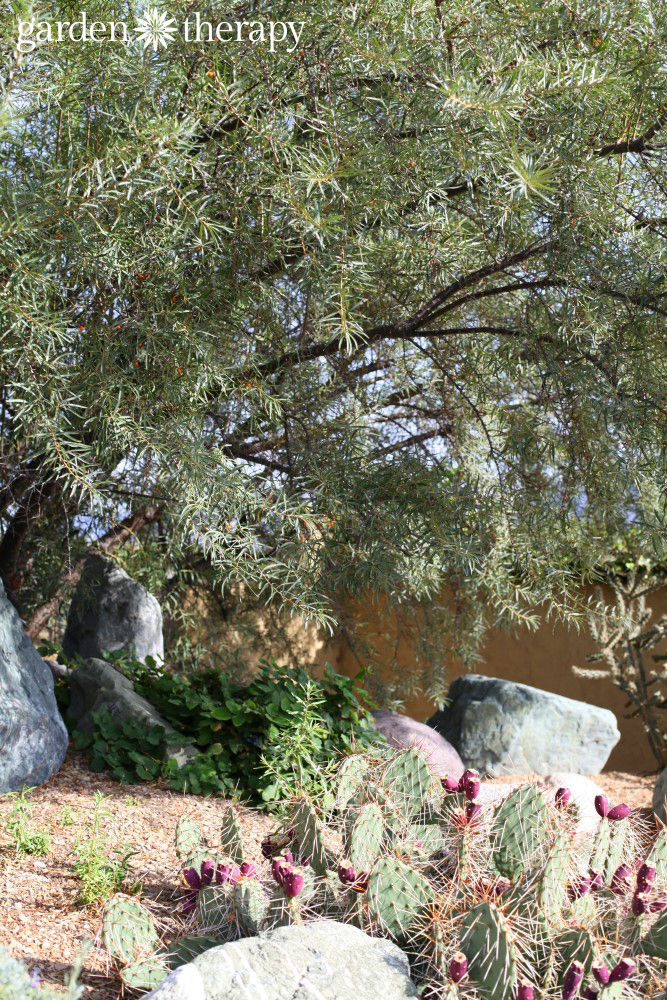
One of the best things you can do for drought and your local ecosystem is getting rid of turf if you don’t need it. Replace it with drought-tolerant landscaping, dry river beds, rain gardens…whatever suits your preference and conditions best! Trust me, it will look much more beautiful than a turf lawn anyway.
Drought-Tolerant Plants
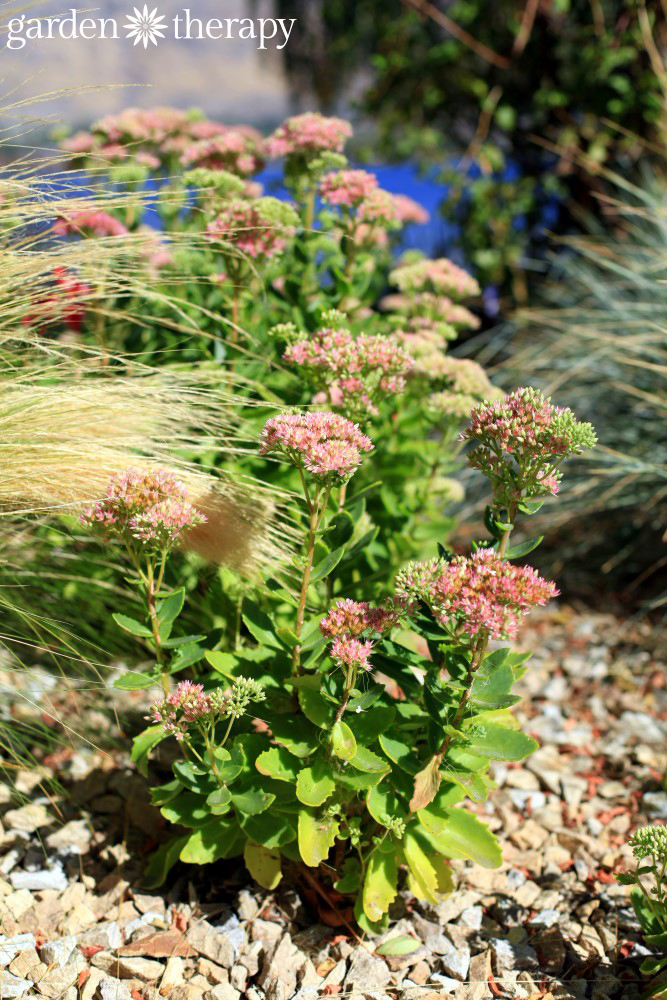
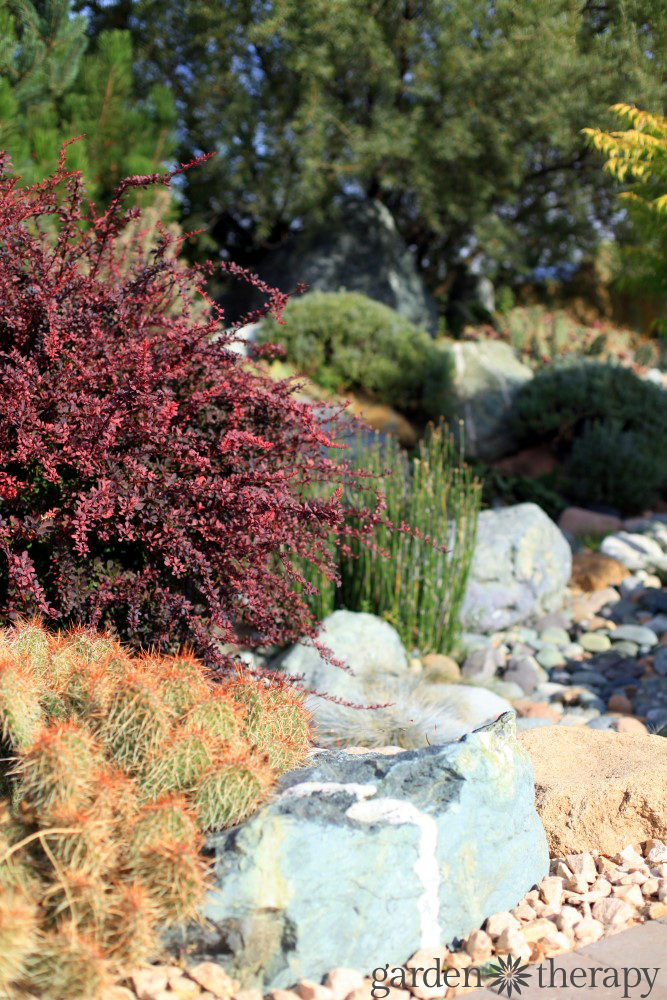
We can still grow plants, have gardens, and create a beautiful environment as long as we adapt and change. As you can see from the photos in this post, there are many beautiful options for landscaping for drought.
Most garden centres will advertise drought-tolerant plants, so they can be easy to find when you’re looking for them. In general, these are some great options:
- Native plants. They’re already used to your area’s local conditions.
- Ornamental grasses. Many grasses have large root systems that allow them to source water deeper in the soil.
- Trees. Once established, they very rarely require supplemental watering and provide shade and water retention for the plants below.
- Perennials. They can go for longer periods without water than annuals, since they have established root systems. Check out this list of drought-tolerant perennials.
- Succulents and Cacti. These plants are famous for surviving on little water in the summertime.
More Tips for Saving Water

A city girl who learned to garden and it changed everything. Author, artist, Master Gardener. Better living through plants.