

Photo: CBS Photo Archive/CBS via Getty Images
One recurring charge leveled by ousted 60 Minutes correspondents is that the Bari Weiss–led regime at CBS News has tried to inject political bias into their coverage. Cecilia Vega, who was fired on May 28 along with Sharyn Alfonsi and the show’s senior leadership team in a purge known as “Black Thursday,” said in a farewell note that “my producing teams and I have experienced efforts to insert political bias into our stories.” Alfonsi, who accused management in December of “political” interference after Weiss abruptly pulled her “Inside CECOT” story hours before air, said she was being penalized “for refusing to sanitize factually accurate reporting” and that management “is abandoning” the show’s commitment to “fearless independent journalism.”
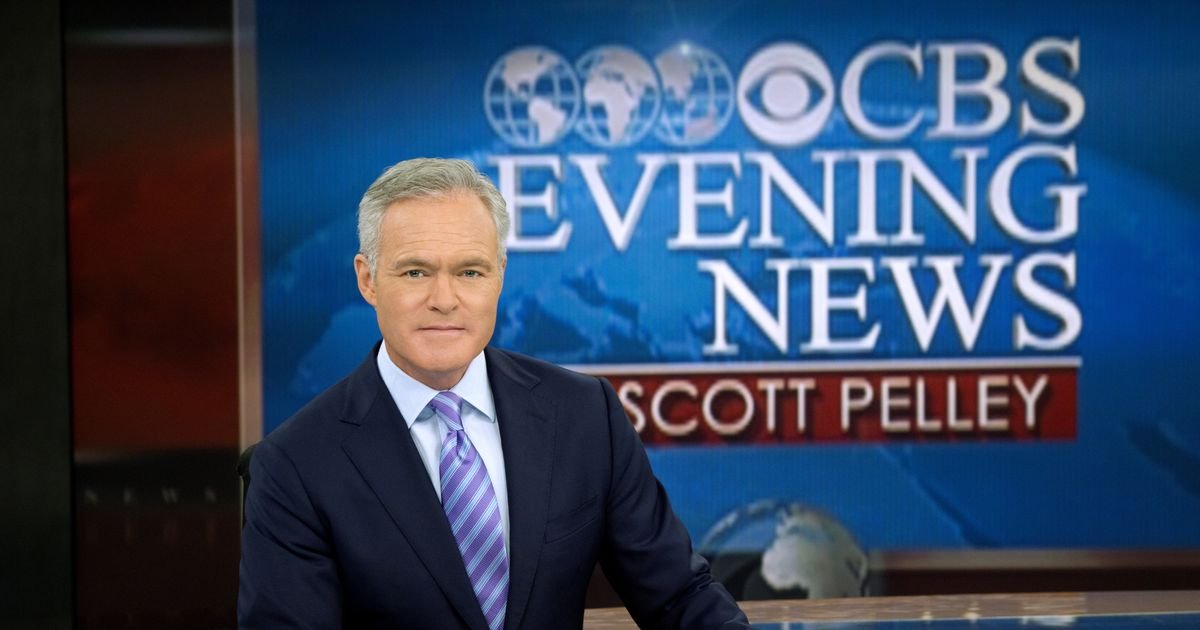
Anchor Scott Pelley, who was fired last Tuesday, said on the way out that management had instructed him “to inject falsehoods and bias into a politically sensitive story,” including “assertions that are unverified.” In his first post-firing sit-down on New York Times podcast The Daily, Pelley elaborated on that accusation of bias, telling host Lulu Garcia-Navarro that the incident in question stemmed from his February reporting on the Trump administration’s immigration crackdown in Minneapolis, where federal officers shot and killed Renee Good and Alex Pretti. Pelley said he believed his team had “done a really good job” in producing a balanced account, which included images of protesters acting aggressively and confrontationally.
But just hours before the broadcast, he recalled, Weiss sent “an email to my boss, Tanya Simon. Two of the things in the email include, ‘Can we make the protesters look more violent?’ Now, I’m paraphrasing. I don’t have the quote, but that’s what was communicated to me. And the other thing, Renee Good’s car. ‘You need to describe her as driving toward the officer.’”
“This is not what you see on the video,” said Pelley, noting that “you clearly see Ms. Good’s wheels turned completely as far as they will go away from the officer” before “he shoots her in the head.” Pelley said he and his video editor repeatedly went over the footage “and realized that the event was not as the president said and not the way Bari Weiss remembered it.” To Pelley, it appeared that “there was a thumb on the scale for the president’s version of events.”
Pelley said he didn’t hear from Weiss after the report aired and that perhaps she “didn’t see the broadcast and didn’t realize that those changes hadn’t been made.” A CBS News spokesperson did not immediately respond to New York for comment but provided a comment to The Daily: “In an email, Bari made four points in the course of editorial back-and-forth. They had no political motivation and were proposed solely to make the piece as strong, fair, and accurate as possible. As is frequently the case in any newsroom that operates with collaboration, not everything she raised made it into the final piece.”
In the Daily interview, Pelley got emotional when describing 60 Minutes as a family and recalling his experiences reporting alongside colleagues in war zones — and how the show is now being “murdered.” He described Weiss as demonstrating “incompetence” on the job and pointed to her lack of experience in television news. (After acquiring her right-learning contrarian site, the Free Press, Paramount chief David Ellison appointed Weiss in October to be CBS News’ editor-in-chief.) In Pelley’s view, newly installed executive producer Nick Bilton appeared “callous” and “tone deaf” during his first meeting with staff, where Pelley peppered the new boss with questions. On Friday, Bilton, who primarily worked as a technology reporter and documentarian before succeeding Simon, promised the staff editorial independence.
Some 60 Minutes veterans, like Steve Kroft, see the venerable program, which continues to be the top-rated newsmagazine in America, as now radically changed by Weiss’s recent moves. “I think basically 60 Minutes, as the audience has known it, no longer exists,” he told me last week, and he questioned what the program will look like when it returns this fall. “It seems almost impossible for me to imagine what kind of a show they can put on in September, starting from the position that they’re in, having already discarded some of the most capable people at the show.”
When asked if Weiss should be removed, Pelley responded, “Oh, gosh, yes.” Pelley said that “television is not her thing,” and she “brings an ideology into CBS News where that is just anathema, and so it’s a terrible fit.” He expressed hope that CBS parent Paramount will intervene because “we need adult supervision, and at the moment, we don’t have it.”
“They don’t know what they’re doing. And there’s a subtle political bias that I’ve never seen at 60 Minutes before or at CBS News before,” he said. “So that is my hope: a return to sanity. We can save this. It’s possible to land this plane. But right now, CBS News is on fire.”
